Search

Rainy Day's Books, Video Games and Other Writings

Tag

reading review

Book Review: The Book Jumper

                                       Rating: 2 stars

Amy Lennox doesn’t know quite what to expect when she and her mother pick up and leave Germany for Scotland, heading to her mother’s childhood home of Lennox House on the island of Stormsay.

Amy’s grandmother, Lady Mairead, insists that Amy must read while she resides at Lennox House—but not in the usual way. It turns out that Amy is a book jumper, able to leap into a story and interact with the world inside. As thrilling as Amy’s new power is, it also brings danger: someone is stealing from the books she visits, and that person may be after her life. Teaming up with fellow book jumper Will, Amy vows to get to the bottom of the thefts—at whatever cost.

This book wasn’t quite what I expected. Told from the perspective of Amy Lennox, a girl whose family has the ability to jump into books, I was hoping this would be a much better read. 

But before I get into what was bad, let me quickly tell you what I enjoyed about The Book Jumper. I found the story itself to be interesting. Even though I’ve read a book similar to this one (Inkheart), I find the idea of being able to immerse yourself into your favorite stories and meet some of your favorite characters to be very exciting. As someone who hopes to one day publish a story of my own, books like this remind me why I love reading and writing so much. They bring out the love in storytelling for me and make me interested in reading books I haven’t enjoyed in a really long time. 

I also liked the characters. Despite any of them having any sort of development, I found the characters to be relatable. I also loved finding out how they were connected to each other in Stormsay. Each of the characters had an important role to play and it was interesting to see how everything turned out in the end. I liked getting to meet some of the literary characters because it was nice to see how they interacted with each other. 

One of my favorite aspects of this book was seeing Amy’s ability in action. I was curious about how the author was going to incorporate book jumping into the story and wasn’t disappointed. It was interesting to see that book jumping had zero affect of the original plot of the books unless jumpers themselves decided to interfere with the story. 

I also like the book cover and the little paragraphs before each chapter. It looks really beautiful, like the story came out of a fairy tale.  I found the little paragraphs before each chapter to be very captivating. After reading this story, you understand their purpose and see how they connect to the overall plot.

Sad to say but there were so many things with this book that made it hard to enjoy it as much as I’d have liked. I found the writing to be too dense, almost as if the author was trying to pack everything in at once. And it showed. The reader can see it in the story when it comes to the plot. It’s all rushed, like the author had no time to continue writing this story. 

There’s also a lack of character development and morals in this book that bothers me. I find that even though the characters can be relatable, they don’t really learn from what happens in this story. They don’t change or progress in any way that shows that what happened in the story affected their lives. The only exception to this is Amy since she didn’t know about her abilities until she and Alexis came to Stormsay. What also bothers me with The Book Jumper is the way protecting the stories is portrayed. Throughout the book, Amy again and again is telling everyone that something is going on in the literary world. But nobody believes her or listens to her, except for Will. Instead, they get mad she’s using her abilities to go to other literary world’s when she’s been assigned to watch over one of them. Even when a literary character loses their life in the real world, nobody bats an eye. They continue moving on as if nothing happened. In many ways, it’s as if the events in this book happened in a small vacuum because nobody else in the real world is affected by the outcome. 

Even though I enjoyed reading The Book Jumper, I’m sad because it’s not as good as it could be. It had so much potential, but the author didn’t manage to pull it off. 

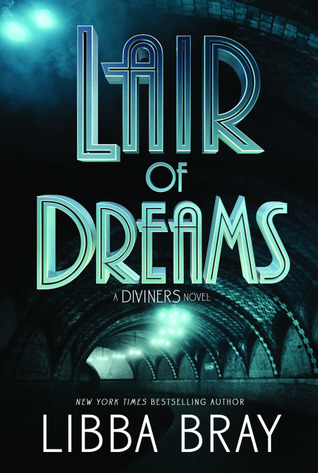
Book Review: Lair of Dreams (The Diviners #2)


                                               Rating: 3 stars

The longing of dreams draws the dead, and this city holds many dreams.

After a supernatural showdown with a serial killer, Evie O’Neill has outed herself as a Diviner. With her uncanny ability to read people’s secrets, she’s become a media darling, earning the title “America’s Sweetheart Seer.” Everyone’s in love with the city’s newest It Girl…everyone except the other Diviners.

Piano-playing Henry DuBois and Chinatown resident Ling Chan are two Diviners struggling to keep their powers a secret—for they can walk in dreams. And while Evie is living the high life, victims of a mysterious sleeping sickness are turning up across New York City.

As Henry searches for a lost love and Ling strives to succeed in a world that shuns her, a malevolent force infects their dreams. And at the edges of it all lurks a man in a stovepipe hat who has plans that extend farther than anyone can guess…As the sickness spreads, can the Diviners descend into the dream world to save the city?

Lair of Dreams was a great read for me because the story and characters made me want to find out more. I enjoyed this book because the story centered around the ability for Diviners to walk through dreams. In particular, it centered around my favorite character’s friend Henry and introduced us to Ling, both whom can walk through dreams. I found this part of the story to be interesting because readers found out more about Henry and also learned how the dream world played a role in the events that followed. I also find dreams to be a fascinating subject, which allowed me to enjoy this book even more. Especially when Ling discovered a new ability she could harness in the dream world. I liked learning Henry could walk through dreams because it’s a nice tidbit of information that Libba Bray didn’t include in The Diviners. It also allowed me to learn more about his character before he and Theta had become friends. I also liked learning more about Theta and how she plays an important role in the story. 

I also enjoyed this story because the dream world felt so real. Bray really did a good job of making dreams so powerful that nobody would want to wake up from them. She really made the place Henry and Ling went to feel so real as if I was there myself. But she also did well at showing the dark side of dreaming and how it can affect the mind. This can be seen through Henry who starts visiting the dream world more frequently because the love of his life is there. He then starts staying in the dream world for longer periods of time to the point where it affects his everyday life. You as the reader also see this through the sleeping sickness. This sickness is the main root of our character’s problems as the sickness spreads and affects one of their own. It’s up to them to stop the cause before the sickness can spread through the whole city. 

I also enjoy the mystery of the series surrounding Project Buffalo and Blind Bill. Bray gives us little details about Project Buffalo that make us continue to be invested in the series. I also like the way Blind Bill’s character is portrayed and can’t wait to find out what his main role will be in the rest of the series. 

While I don’t particularly like the ending of Lair of Dreams, it has many more flaws that’ve caught my attention. One of my biggest criticisms of this book is Evie’s character. In The Diviners, I really didn’t mind her character too much. However, I feel like she’s devolved since then. She’s now famous because of her powers and goes on the radio to show off her ability to read objects. She also no longer wants anything to do with her uncle and starts going to parties almost every night because of her celeb status. I feel like all of these things made me like her character less because she becomes shallow, vain and selfish and allows her fame to get to her head. While I understand why she’s doing all of these things, I just had a hard time sympathizing with her and wanting to read her role in this book. She becomes so caught up in city life she fails to realize how much danger she and the people she loves are in, causing her not to play as much of a vital role in the story. 

I also disliked the role Will’s character plays in the story. I hate it because Bray doesn’t really tell us where he’s gone off to and the only time we see his character after he leaves causes the reader quite a bit of confusion. I find this to be a serious flaw in the story because it leaves me with a lot of questions that don’t get answered by the end of the book. It would’ve been nice to have some answers instead of feeling more confused than when I started. 

While I very much enjoyed reading Lair of  Dreams, there were so many issues I had with it that I didn’t enjoy it quite as much as I’d hoped. 

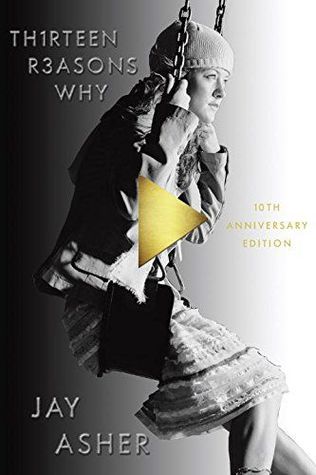
Book Review: Thirteen Reasons Why

thirteen-reasons-why-book-cover

Rating: 3 stars

Clay Jensen returns home from school to find a strange package with his name on it lying on his porch. Inside he discovers several cassette tapes recorded by Hannah Baker–his classmate and crush–who committed suicide two weeks earlier. Hannah’s voice tells him that there are thirteen reasons why she decided to end her life. Clay is one of them. If he listens, he’ll find out why.

Clay spends the night crisscrossing his town with Hannah as his guide. He becomes a firsthand witness to Hannah’s pain, and as he follows Hannah’s recorded words throughout his town, what he discovers changes his life forever.

I remember being introduced to this book by an old friend of mine when I was in high school. At the time, I remember reading it, becoming so engrossed with Hannah’s character. She was a mysterious girl because when reading, you didn’t really know too much about her. She told you about the things that happened to her during her freshman year of high school and that she wasn’t the type of girl the rumors portrayed her to be. But I also felt a connection to her, having been in high school at the time and understanding the struggles she was going through.

I felt that I could relate to her. Even though I never had rumors like that about me flying around school, I was bullied during my early years of education. So I completely understood where she was coming from and could see how the events that transpired turned her whole world upside down. Even though I’m no longer in high school, reading Thirteen Reasons Why a second time around didn’t change that perception for me.

Hannah Baker is a very sympathetic character. She attends a new high school, trying the best she can to fit in only to find her peers never taking the time to get to know her as a person. They are so busy believing the rumors about her to realize how alone she was and to see that their actions unintentionally lead to her death.

Another reason this story pulls at my heart is because it’s a very sensitive topic. Suicide isn’t something a lot of people feel comfortable talking about, due to people not understanding how the smallest things can have a big impact on a person’s life. Like mental illness, people don’t know how to talk about suicide and don’t understand it as well as people who’ve felt that pain before. Despite how hard suicide as a topic is to discuss about, these discussions need to be had and I appreciate Jay Asher, the author of Thirteen Reasons Why, for writing about it. It makes me hopeful that one day, suicide won’t be such a big stigma.  This book also brought up a lot of other key issues, such as rape and drunk driving, which aren’t heavily talked about either and are just as important to discuss.

I also enjoyed this book because of the way the story is told. The novel is from the perspective of Clay Jensen, who receives cassette tapes one day after school with Hannah’s voice on them explaining why she killed herself, saying the responsibility lies with those who receive the tapes. The people involved also receive a map of their town, marked with stars of locations where the events Hannah mentions take place. I enjoyed reading this book through Clay’s thoughts and actions and Hannah’s voice. It made it seem more in depth and personal. I also liked that Asher used cassette tapes for Hannah’s death note. As a 90s child, I grew up using cassette tapes and a Walkman whenever I wanted to listen to something on the go. It made the story a little nostalgic with those elements, considering how far technology has advanced in today’s day and age.

However, I do have a couple criticisms for Thirteen Reasons Why. While I enjoyed the way this story was told, I felt like Asher had Hannah more telling the story than Clay. Yes, he’s the one who had the tapes and his thoughts about what transpired where pretty clear, but I felt like there was more telling in the story than showing. I also didn’t really see a whole lot of character development in any of the characters in this story. I think part of that is because of hearing from Hannah her thoughts about the people who affected her life made it hard for us to really get a good understanding of the other characters. We knew Hannah didn’t really like them, but I wish we could’ve learned more about them and why they were such terrible people.

I also just didn’t really get how Clay is supposedly a nice guy. He’s included in the tapes and the story is told from his perspective, but you don’t really get to know him as a person outside of him listening to those tapes. Throughout the book, he only interacts with a couple people and even those few interactions didn’t give us a real glimpse of his character. Yes, he did some nice things, helped people out, but that isn’t enough for me to truly believe someone is a nice person. I also didn’t see how this whole thing really changed his life either. I get he had a better understanding of what Hannah was going through after the tapes, but he didn’t seem all that different to me than before. But I did sympathize with him because it was evident in the story how much he cared about Hannah and wanted to help her in any way he could.

I felt like I knew more about where Hannah and the rest of her classmates lived than the characters in this story. Part of that was because of Clay going to some of the locations Hannah mentioned in the tapes and Asher describing those places in perfect detail. While I don’t mind knowing more about the world characters live in, it’s a little frustrating with this story because I wanted to know the characters better other than knowing all the terrible things they did to Hannah.

While I sympathize with Hannah, I sometimes find her character to be very weak. I understand how depression works on a person’s mind, making them feel completely helpless, but I just didn’t always understand some of her actions. For example, the incident with the sign I felt like she could’ve very easily done something about. I know she had called the police, but I felt like she should’ve told them who knocked the stop sign down. I felt this way with some of the other incidents that happened in the book too because they were things she could’ve very easily done something about. Especially all of the things that happened towards the end where she’s still struggling to make up her mind about whether to take her own life. Despite these issues with her character, I understand that she was probably already too far gone at these moments in the story to really do anything about these situations. I feel like that is probably why she didn’t stop certain things from happening and why I feel myself questioning some of her actions.

While I have all of these criticisms for Thirteen Reasons Why, I still enjoyed reading it again. It left me sad knowing the story was over and remembering Hannah being dead, but I still found it as good of a read as the last time I read it. I hope others read it with an open mind and find themselves understanding suicide being a much more complicated issue than it seems. Because even though the reasons Hannah gave seem very small and insignificant, together they created a snowball effect that resulted in her not able to get any help until it was too late.

Book Review: Throne of Glass (Throne of Glass #1)

throne-of-glass-book-cover

Rating: 4 stars

After serving out a year of hard labor in the salt mines of Endovier for her crimes, 18-year-old assassin Celaena Sardothien is dragged before the Crown Prince. Prince Dorian offers her her freedom on one condition: she must act as his champion in a competition to find a new royal assassin.

Her opponents are men-thieves and assassins and warriors from across the empire, each sponsored by a member of the king’s council. If she beats her opponents in a series of eliminations, she’ll serve the kingdom for four years and then be granted her freedom. Celaena finds her training sessions with the captain of the guard, Westfall, challenging and exhilarating. But she’s bored stiff by court life. Things get a little more interesting when the prince starts to show interest in her … but it’s the gruff Captain Westfall who seems to understand her best.

Then one of the other contestants turns up dead … quickly followed by another. Can Celaena figure out who the killer is before she becomes a victim? As the young assassin investigates, her search leads her to discover a greater destiny than she could possibly have imagined.

I remember the first time I read this book. My sister had come home to visit from college and gave me a copy, telling me a friend of hers from school thought I’d enjoy it. I remember reading it, feeling completely mesmerized by the story within its pages, wanting to find out what happened next to Celaena. Reading Throne of Glass again, I still remember those feelings, which have returned just as deeply.

The first book in a series I have yet to continue reading, Throne of Glass made me wonder what it would be like living as an assassin. An assassin well-known for her abilities, Celaena is more than she appears, which is why I enjoy her character so much. She’s very headstrong, good with any weapon in existence, and knowledgeable about the world she lives in. Even though she’s an assassin, she cares very much about protecting the people around her, despite the circumstances she’s currently dealing with. While at times I could find the way she talked to certain characters annoying, I overall enjoyed seeing such a strong character that I can’t wait to see how she continues to develop in the rest of the series.

I also enjoyed seeing this book from Dorian and Chaol’s point of view. Having their points of view allowed the reader to better understand their characters and how they both changed as the competition continued. While both Dorian and Chaol’s loyalty belongs to the kingdom, it gets tested when Celaena’s life is at stake during the final moments of the competition. I also loved their perspectives because you could see how conflicted both characters could be. As prince of the kingdom, Dorian knew he shouldn’t trust Celaena, but at the same time you could see the relationship he had with his father was pretty rough. This resulted in him being conflicted between doing what was right for the kingdom versus his own happiness, which I believe will continue to play an important role in the series as it continues.

I enjoyed reading this book too because of the competition and how magic came to play in the story with the competitor’s mysterious deaths. Sarah J. Maas did a wonderful job at weaving both these elements together to create a unique story that keeps the reader wondering what happens next. However, I did sometimes find these elements could be a little too much because I felt like there was already a lot going on in the story. But at the same time, Maas does a good job of connecting these two things together in order to allow more possibilities to exist in the world Celaena lives in.

I overall enjoy Throne of Glass because it kept me coming back for more. I can’t wait to read the rest of the books in the series to find out what Celaena does next.

Book Review: The Sight (The Sight #1)

the-sight-book-cover

Rating: 4 stars

In the shadow of an abandoned castle, a wolf pack seeks shelter. The she-wolf’s pups will not be able to survive the harsh Transylvanian winter. And they are being stalked by a lone wolf, Morgra, possessed of a mysterious and terrifying power known as the Sight. Morgra knows that one of the pups born beneath the castle holds a key to power even stronger than her own power that could give her control of this world and the next. But the pack she hunts will do anything to protect their own, even if it means setting in motion a battle that will involve all of nature, including the creature the wolves fear the most: Man.

I remember the first time I read this novel I was in middle school. I don’t remember how I came upon it. What I do know is that the cover intrigued me and made me interested in reading the story between its pages. And so I did, several times throughout middle school and high school. It’s a story I loved reading back in those days that I felt the need to revisit.

Even though I’ve read The Sight before, I found my love for it is still there. The story is just as beautiful and enchanting as when I last read it. It’s rich in detail about wolves, making it clear David Clement-Davies did his research on the wolf pack hierarchy. As someone who finds wolves to be fascinating and beautiful creatures, the story in this book’s pages whispers to me and reminds me of why I love stories with high elements of fantasy.

I love this book too because of those fantasy elements. The story centers around this mysterious power known as the Sight. This power is rare, wolves are born with it and it allows them the ability to do things like see the future through the water’s reflection or seeing things through a bird’s eyes. This power adds a unique element to this story that intrigues the reader into wanting to find out how this ability plays out in this novel. It’s at the center of the whole universe these characters live in and makes me view wolves in a completely different way.

The storytelling in The Sight is very rich in detail and the characters are deeply developed in their own unique ways. My favorite character development in this story can be seen with Larka’s brother Fell who plays a very important role in this novel and the sequel that follows it. He’s the complete opposite of Larka, both in physical appearance and mentality. While Larka’s fur in color is white, he’s completely black. While Larka is the light of this novel, Fell’s character takes a drastic turn you don’t see coming. But in the end, he’s saved by Larka’s love for him when she realizes who he’s become. He plays an important role in the story that causes his character to shift in unexpected ways but that makes changes in his life for the better, leading up to him being in charge of his own destiny.

In this novel however, there were two things I didn’t like about it. I wasn’t particularly pleased that Clement-Davies had different names for the animals in the story, like the Omega wolves in a pack also being known as Silka. While I understand the author’s need to add some uniqueness to the story, I found that having these names without any real explanation to their origins can cause some confusion to readers like me, but also reduce his research credibility. These names also didn’t add anything to the story so I wasn’t able to really see why they had to be included.

I also have a love-hate relationship with the ending. While I understand why Larka’s sacrifice is necessary to keeping everyone free, it makes it feel like what she did was all for nothing. But at the same time, I understand that it was her destiny and she did what she felt was necessary for the sake of everyone else. It still didn’t make it easier for me though to accept, despite how many times I’ve read this story. It’s the one aspect of the novel I sometimes wish was different, but am also grateful because we wouldn’t have the sequel without it.

Despite these two things, The Sight is a beautifully crafted story, rich in folklore and fantasy that I find myself reading over and over again. It’s one of my favorite stories and I highly recommend it to any fantasy and wolf lover.

Book Review: When She Woke

when-she-woke-book-cover

Rating: 3 stars

Hannah Payne’s life has been devoted to church and family. But after she’s convicted of murder, she awakens to a nightmarish new life. She finds herself lying on a table in a bare room, covered only by a paper gown, with cameras broadcasting her every move to millions at home, for whom observing new Chromes—criminals whose skin color has been genetically altered to match the class of their crime—is a sinister form of entertainment. Hannah is a Red for the crime of murder. The victim, says the State of Texas, was her unborn child, and Hannah is determined to protect the identity of the father, a public figure with whom she shared a fierce and forbidden love.

A powerful reimagining of The Scarlet Letter, When She Woke is a timely fable about a stigmatized woman struggling to navigate an America of the not-too-distant future, where the line between church and state has been eradicated, and convicted felons are no longer imprisoned but chromed and released back into the population to survive as best they can. In seeking a path to safety in an alien and hostile world, Hannah unknowingly embarks on a journey of self-discovery that forces her to question the values she once held true and the righteousness of a country that politicizes faith and love. 

When She Woke is a really powerful story. A story that makes me question the world Hannah lives in as well as my own society.

Chroming people depending on their crime is an interesting idea to think about. Especially because in this book, I feel like each color choosing for a crime is symbolic. Red for murder is obvious in the sense that murdering someone involves blood being shed while blue for rape represents a sense of innocence being lost. I think the idea of chroming people in general is interesting because it would make it easier for us as a society to know who’s committed a crime. We’d be better able to protect ourselves from people we don’t know who could hurt us. But at the same time, I see it has serious issues too. It would be another form of racism where people who’ve been chromed will have to deal with people trying to hurt them because of their past actions. It would create another society for people to continue hating each other. But at the same time, society would be safer because we’d know whose committed crimes and justice would be served. Either way, it’s an issue you ponder as a reader when reading this book.

This book also makes me question faith. I’m not a highly religious person to begin with because I believe everyone should be able to believe in whatever they want without someone judging them. Not everyone has the same faith and I think everyone has a right to practice their religion without fear from others perceiving them in a negative light. In When She Woke, Hannah had her own doubts about what she believed in whenever she became a chrome. Life changed for her and she found she couldn’t feel God’s presence anymore. She also realized that she missed out on so much in life because of her faith and how it perceives women. While I enjoyed reading this aspect of the book, it definitely makes me question religious institutions and the way people act towards others in the name of their faith. While I believe religion is important, I don’t think it should be considered so important that you completely disregard another person and treat them ill because of their actions. If anything, that’s when a person needs religion the most. It’s because of the way people act towards others in the name of their faith that I don’t care as much about religion as others. And this book brought that to the surface to me in ways I didn’t expect.

I enjoyed reading this book because like the two issues I’ve mentioned above, it brings a lot of interesting conversation to the table. Conversations about issues like crime, abortions, faith and racism that while uncomfortable to talk about need to be discussed. I enjoyed reading this book because these issues were included in the story and made me think.

However, there were also some aspects of When She Woke I wasn’t pleased to see. I wasn’t happy that they made faith such a huge part of this story. While I understand that Hannah was once a very religious girl, I feel like they really enforced it too much sometimes. Especially because it seemed like almost everyone in this society was religious in some way even though that’s not at all how everyone in our world acts. I felt like reverends in the story like Hannah’s lover were given celebrity status in the story for being so indoctrined in their faith. While it gave me hope that things with chroming wouldn’t be too bad, I also felt like it was trying to force a message about faith on people too.

Another aspect of this story I wasn’t happy about was the way in which Hannah becomes saved. I found so many plot holes with the whole thing, especially near the end of the story when Hannah is left to travel to Canada on her own. Especially because so much could’ve gone wrong with her traveling alone. I also just didn’t understand why this organization was only helping women who’d gotten abortions instead of helping every chrome who wanted to repent their crime. I guess I just expected more from this besides Hannah going to Canada to reverse the change. Maybe something along the lines of her and the organization stopping chroming from being legal. I guess I feel like the story isn’t finished being told and that more should’ve been written.

Overall, I really enjoyed reading When She Woke. It was a very powerful story with a lot of things for the reader to talk about. It just didn’t necessarily have enough explained in the plot for me to give it a higher rating. But I did enjoy the book as a whole and recommend it to anyone interested in reading something like this.

Book Review: Nelly Dean: A Return to Wuthering Heights

nelly-dean-book-cover

Rating: 4 stars

Young Nelly Dean has been Hindley’s closest companion for as long as she can remember, living freely at the great house, Wuthering Heights. But when the benevolence of the master brings a wild child into the house, Nelly learns she must follow in her mother’s footsteps, be called “servant” and give herself over completely to the demands of the Earnshaw family.

But Nelly is not the only one who finds her life disrupted by this strange newcomer. As death, illness, and passion sweep through the house, Nelly suffers heartache and betrayals at the hands of those she cherishes most, tempting her to leave it all behind. But when a new heir is born, a reign of violence begins that will test even Nelly’s formidable spirit as she finds out what it is to know true sacrifice.

Nelly Dean is a wonderment of storytelling and an inspired accompaniment to Emily Bronte’s adored work. It is the story of a woman who is fated to bear the pain of a family she is unable to leave, and unable to save.

As someone who detested Wuthering Heights after reading it for an English Literature course at my college, I decided to give this book a try to see if it would be any better. Despite how much I didn’t enjoy this book’s inspiration, I found Nelly Dean redeemed the characters for me.

Told from the perspective of one of the servants at Wuthering Heights, this book truly depicts the plot of the original in a way that makes the story and characters seem not so terrible. This book made me view the characters in a different light, even sympathizing with some of them. I found myself better understanding Healthcliff’s predicament and why he hated most of the Earnshaw descendants so much.

Hearing this story from the perspective of Nelly also put a different twist on the story from what you hear in the original. You better understood her view of the following events that unfold as well as the part she plays in it. You discover secrets originally hidden in the original storyline and how important a role servants play in great houses like Wuthering Heights.

Another reason I enjoy this story so much better than Wuthering Heights is because of Nelly’s character. I sympathized with her so much while reading this book. She dealt with a lot of struggles with the Earnshaw family but yet still stayed at the house despite her life circumstances. I understood why she was conflicted to leave her service with this family despite her own mother leaving them behind.

The writing style of this story made it more enjoyable too. I like it because the story is told in letter format, though it doesn’t necessarily follow the style of a letter with each chapter. But you know all of the events being described are addressed directly to Mr. Lockwood, despite none of the letters being sent out. I find this to be interesting though, considering Mr. Lockwood is the narrator of the original book. So in many ways, I felt like Case did a good job of making it seem like he was passing the torch of telling the story to Nelly.

While I enjoy this book much better than the original, I still think a majority of the characters are awful. This book slightly lessened my dislike of the characters, but not by much. It definitely made it easier to sympathize with all of the characters by making them seem more human, but I still don’t like these residents. While I understood Nelly’s conviction to stay there, I also had moments where I thought she should leave them. I feel like her staying there just allowed the pain she experienced to never heal. I get being with a family that feels like your home, but I felt like it was unhealthy and caused her more harm than good. Considering she could’ve gotten a position somewhere else, I just didn’t see why she stayed for so long when she wasn’t happy.

But overall, I enjoyed reading Nelly Dean very much. To the point where I’m actually considering giving Wuthering Heights another chance.


Book Review: Modern Lovers

Modern Lovers Book Cover

Rating: 3 stars

From the New York Times‒bestselling author of The Vacationers, a smart, highly entertaining novel about a tight-knit group of friends from college—their own kids now going to college—and what it means to finally grow up well after adulthood has set in.

Friends and former college bandmates Elizabeth and Andrew and Zoe have watched one another marry, buy real estate, and start businesses and families, all while trying to hold on to the identities of their youth. But nothing ages them like having to suddenly pass the torch (of sexuality, independence, and the ineffable alchemy of cool) to their own offspring.

Back in the band’s heyday, Elizabeth put on a snarl over her Midwestern smile, Andrew let his unwashed hair grow past his chin, and Zoe was the lesbian all the straight women wanted to sleep with. Now nearing fifty, they all live within shouting distance in the same neighborhood deep in gentrified Brooklyn, and the trappings of the adult world seem to have arrived with ease. But the summer that their children reach maturity (and start sleeping together), the fabric of the adults’ lives suddenly begins to unravel, and the secrets and revelations that are finally let loose—about themselves, and about the famous fourth band member who soared and fell without them—can never be reclaimed.

Straub packs wisdom and insight and humor together in a satisfying book about neighbors and nosiness, ambition and pleasure, the excitement of youth, the shock of middle age, and the fact that our passions—be they food, or friendship, or music—never go away, they just evolve and grow along with us.

I found this book to be a comfortably light read. A book to be read whenever you’re in no hurry to read anything else. Part of the reason is because the cover of Modern Lovers is very cutesy and comforting that it made me want to take my time reading this book.

The book as a whole is okay. I enjoyed the storyline because it was simple. The problems the protagonists encountered were pretty one dimensional because they were fixed very easily without given another thought. This book was a pretty simple read, something I didn’t have to give too much thought to.

I also enjoyed reading Modern Lovers because of the multiple points of view. Throughout the book, each chapter is from the perspective of a different character. I enjoyed having all of these different perspectives because even though these characters were pretty simple, it gave the reader a better insight into each of their lives.

I also like that it is a coming of age story. As the three band members in the story are getting older, their children are becoming adults, trying to figure out what they want to do next in their lives. I really enjoy reading these type of stories because they show contrasts between the two generations very well.

However, there are also some things about this book I didn’t absolutely love. For one, I feel like all of the characters in the story are pretty flat. In Modern Lovers, you get the tiniest of character background of everyone, but it’s not enough to heavily contribute to the story.

I also didn’t particularly like that none of the conflicts in the story were really solved. If anything, I felt like all of the conflicts in this story were just pushed to the side to deal with later. Or handled in a way most people wouldn’t. A perfectly good example is Zoe’s marriage. Neither one of them ever actually had a conversation about why their marriage was getting bad. Then all of a sudden, it was good again. While the different conflicts in the story were interesting, I don’t agree at all with the way any of them were handled. It was unrealistic because that’s not how conflicts between adults are handled. When you have issues with someone, you talk about them and work together on how those issues can be resolved. You don’t just pretend like there are no problems and hope they go away on their own.

I was also disappointed that the story didn’t talk a bit more about their band. I was hoping we’d hear more about the inner workings of the music industry during the time. Instead, we were given a couple brief flashbacks about the mysterious fourth band member who became famous before she died. While I didn’t mind hearing more about Lydia and how her death impacted the rest of the members in their current lives, I wanted so much more from this part of the story but felt like I never got anything substantial. Just that they formed together during their college years and then disbanded one day.

While I found the simplicity of this book to be quite enjoyable, at the same time I was also hoping the storyline in Modern Lovers to be a little more complex and the characters to have more of a personality. But despite these issues, Straub crafted a wonderfully written simple story that made for a good light read.


Book Review: Kalahari

Kalahari Book Cover

Rating: 4 stars

Deep in the Kalahari Desert, a Corpus lab protects a dangerous secret…
But what happens when that secret takes on a life of its own?

When an educational safari goes wrong, five teens find themselves stranded in the Kalahari Desert without a guide. It’s up to Sarah, the daughter of zoologists, to keep them alive and lead them to safety, calling on survival know-how from years of growing up in remote and exotic locales. Battling dehydration, starvation and the pangs of first love, she does her best to hold it together, even as their circumstances grow increasingly desperate.

But soon a terrifying encounter makes Sarah question everything she’s ever known about the natural world. A silver lion, as though made of mercury, makes a vicious, unprovoked attack on the group. After a narrow escape, they uncover the chilling truth behind the lion’s silver sheen: a highly contagious and deadly virus that threatens to ravage the entire area—and eliminate life as they know it.

In this breathtaking new novel by the acclaimed author of Origin and Vitro, Sarah and the others must not only outrun the virus, but its creators, who will stop at nothing to wipe every trace of it.

I really enjoyed reading this book. I wasn’t sure what I was going to think of it when I first picked it up. Not because it didn’t sound like something I’d enjoy, but due to not knowing what all was going to happen.

What I enjoyed about reading Kalahari is that it’s the third book in a series. A series where each book stands on its own without the reader having to read the previous books to get the gist of what’s going on. I really enjoyed it for this reason because it meant I didn’t have to go back and read Origin and Vitro before reading this one, though I’m most likely going to read those two books now because of it.

I also enjoyed reading this book because it takes place in a whole other world than what I’m used to. The setting takes place in the Kalahari Dessert, which is located in South Africa. It’s a place I’ve never been to and probably will never get the chance to see. But I enjoyed reading about it in this story because I felt like I was being taken to that place for a short while. It’s a fictional story, but its centered around a real place teaming with wildlife and nature. Reading a fictional book that takes place in a real world setting is something I rarely experience, but enjoy every time I do. I especially enjoyed it while reading this book.

Another reason I found this story so enjoyable was because the main characters felt so real and relatable. Even though I didn’t like all of the teenagers Sarah was stuck interacting with, I felt as if I was getting a glimpse into the way teenagers in today’s society would react if they were stuck in a dessert with little to no access to cell phones and other technologies. I found them relatable in that way, even when there carrying on and bickering got on my nerves. But I enjoyed seeing everything from Sarah’s perspective who isn’t used to dealing with human interaction because of her daily experiences in the wild.

I found the story in Kalahari to be enjoyable too. I like the idea of a deadly virus existing in the wild dessert where no one suspects it to be and a group of teenagers being the ones to stop it. I also enjoyed the story because throughout, the pacing was very climatic. I felt as if I was thrown into the action of the story, and loved every minute of it.

The one thing with this book I didn’t particularly enjoy was how neat and tight they ended the story. I felt as if everything turned out too perfectly for the characters that it was completely unrealistic. For example, I felt as if the author made the cure for the virus too easy. She made it where Sarah was able to figure out the cure on her own with a very limited amount of information. To me, that didn’t really suit the story because it made the events at the end happen a lot quicker than the rest of the book so that everything could be tied up all nice and neat. I also just didn’t like how they ended the book because I wanted to know what happened with the characters after the cure spread to the other animals that had been infected. I wanted to see more of the relationship between Sam and Sarah and wanted to know how this experience affected the rest of the group.

Despite this one issue however, I found Kalahari as a whole to be an absolute enjoyable read. I can’t wait to read the rest of the books in this series at a later date.

Blog at WordPress.com.

Up ↑