Search

Rainy Day's Books, Video Games and Other Writings

Tag

book review

Book Review: All Is Not Forgotten

All Is Not Forgotten Book Cover

Rating: 3 stars

In the small, affluent town of Fairview, Connecticut everything seems picture perfect.

Until one night when young Jenny Kramer is attacked at a local party. In the hours immediately after, she is given a controversial drug to medically erase her memory of the violent assault. But, in the weeks and months that follow, as she heals from her physical wounds, and with no factual recall of the attack, Jenny struggles with her raging emotional memory. Her father, Tom, becomes obsessed with his inability to find her attacker and seek justice while her mother, Charlotte, prefers to pretend this horrific event did not touch her perfect country club world.

As they seek help for their daughter, the fault lines within their marriage and their close-knit community emerge from the shadows where they have been hidden for years, and the relentless quest to find the monster who invaded their town – or perhaps lives among them – drive this psychological thriller to a shocking and unexpected conclusion.

I thought this book was a pretty interesting read. It definitely didn’t turn out the way I expected, but it was worth every minute I spent soaking up the content.

The issues talked about in All Is Not Forgotten are pretty controversial. For starters, Jenny Kramer, who this story is about, gets raped at a party. Everyone in their small town knows about it and is scared because they don’t know who did it. But then, when her parents find out about the incident, they want her to take this drug to make her completely forget it ever happened. So within the first few pages of the story, we as the reader are given two controversial topics: rape and drugs. Then, we are introduced to the narrator, Jenny’s psychiatrist Dr. Forrester who tells us about how he wants to help Jenny get her memory back from that night. This made the book even more interesting to me because the narrator’s unique perspective in the tale gave me a better understanding of memory recall and other psychological terms and how mental illness played a role in helping Jenny with her memory. I found all of these topics interesting to read about in this book because they are very controversial and rarely talked about that I wanted to get a better understanding of these issues and how they all connected. It helps that I find psychology interesting too so I know that made me even more interested in finding out what happened next.

I also enjoyed reading this book because I found the point of view to be very interesting. In most books you tend to read, the story is told from the point of view of the main character because they are the ones mostly involved in the action throughout. But in this story you get the perspective of the psychiatrist Jenny and her family goes to see, whose view on the subject is obviously very different from the families because of his psychological background. I find it interesting because he’s the narrator you don’t expect but also he tells the story in a way for the reader to get a good understanding of what’s going on and why certain characters are acting a certain way. He’s pretty much in the head of all of the characters so the information you get from him is what he’s been told by his clients.

However, if I’m being honest here, Dr. Forrester is definitely not my favorite character. While I know the information presented to us is reliable, I still question the narrator’s perspective on what happened. Even though we know who committed this vile act, I still believe the narrator is pretty unreliable because he took some questionable actions in the story. While I understand why he did those things, those actions made it even harder to trust his character and actually made me dislike him even more. If I’m being honest here, I actually wanted him to be found out so that for once he got a taste of his own medicine.

The reason Dr. Forrester is my least favorite character in All Is Not Forgotten is because he’s a big douche. While his perspective in the book adds a good insight into the story, he comes across as being very arrogant. When explaining everything to the reader, he treats us like a child, which is something I really can’t tolerate. He also just acts like he’s the only person in the story who knows exactly what’s going on and who did it, which really gets on my nerves and frustrated me. Part of this arrogance comes from that he thinks he’s the best psychiatrist in town just because he seems to be the only one people there come to for their needs. So while I enjoyed reading this book because the content kept me interested in wanting to find out what happened next, Dr. Forrester’s character sometimes made it hard for me to want to continue reading.

Another issue I had with this book was the ending. I felt like the author choose an easy target to be the rapist in this story. While it made sense for this character to have committed the crime, I think the path the story was on before was a whole lot more interesting. I think having that person actually been responsible would’ve really made the story a whole lot more interesting to me because I could definitely picture him doing it. I also think it wouldn’t frustrate me quite as much because this character being the rapist just continues to feed Dr. Forrester’s big ego, which I honestly think needed to be taken down a couple pegs.

While I enjoyed reading All Is Not Forgotten, both of these issues made me enjoy the book less. But despite these issues, I thought this book was a great psychological read and find it to be a great segment into reading about more controversial topics.

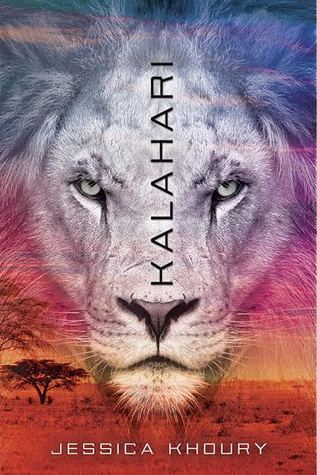
Book Review: Kalahari

Kalahari Book Cover

Rating: 4 stars

Deep in the Kalahari Desert, a Corpus lab protects a dangerous secret…
But what happens when that secret takes on a life of its own?

When an educational safari goes wrong, five teens find themselves stranded in the Kalahari Desert without a guide. It’s up to Sarah, the daughter of zoologists, to keep them alive and lead them to safety, calling on survival know-how from years of growing up in remote and exotic locales. Battling dehydration, starvation and the pangs of first love, she does her best to hold it together, even as their circumstances grow increasingly desperate.

But soon a terrifying encounter makes Sarah question everything she’s ever known about the natural world. A silver lion, as though made of mercury, makes a vicious, unprovoked attack on the group. After a narrow escape, they uncover the chilling truth behind the lion’s silver sheen: a highly contagious and deadly virus that threatens to ravage the entire area—and eliminate life as they know it.

In this breathtaking new novel by the acclaimed author of Origin and Vitro, Sarah and the others must not only outrun the virus, but its creators, who will stop at nothing to wipe every trace of it.

I really enjoyed reading this book. I wasn’t sure what I was going to think of it when I first picked it up. Not because it didn’t sound like something I’d enjoy, but due to not knowing what all was going to happen.

What I enjoyed about reading Kalahari is that it’s the third book in a series. A series where each book stands on its own without the reader having to read the previous books to get the gist of what’s going on. I really enjoyed it for this reason because it meant I didn’t have to go back and read Origin and Vitro before reading this one, though I’m most likely going to read those two books now because of it.

I also enjoyed reading this book because it takes place in a whole other world than what I’m used to. The setting takes place in the Kalahari Dessert, which is located in South Africa. It’s a place I’ve never been to and probably will never get the chance to see. But I enjoyed reading about it in this story because I felt like I was being taken to that place for a short while. It’s a fictional story, but its centered around a real place teaming with wildlife and nature. Reading a fictional book that takes place in a real world setting is something I rarely experience, but enjoy every time I do. I especially enjoyed it while reading this book.

Another reason I found this story so enjoyable was because the main characters felt so real and relatable. Even though I didn’t like all of the teenagers Sarah was stuck interacting with, I felt as if I was getting a glimpse into the way teenagers in today’s society would react if they were stuck in a dessert with little to no access to cell phones and other technologies. I found them relatable in that way, even when there carrying on and bickering got on my nerves. But I enjoyed seeing everything from Sarah’s perspective who isn’t used to dealing with human interaction because of her daily experiences in the wild.

I found the story in Kalahari to be enjoyable too. I like the idea of a deadly virus existing in the wild dessert where no one suspects it to be and a group of teenagers being the ones to stop it. I also enjoyed the story because throughout, the pacing was very climatic. I felt as if I was thrown into the action of the story, and loved every minute of it.

The one thing with this book I didn’t particularly enjoy was how neat and tight they ended the story. I felt as if everything turned out too perfectly for the characters that it was completely unrealistic. For example, I felt as if the author made the cure for the virus too easy. She made it where Sarah was able to figure out the cure on her own with a very limited amount of information. To me, that didn’t really suit the story because it made the events at the end happen a lot quicker than the rest of the book so that everything could be tied up all nice and neat. I also just didn’t like how they ended the book because I wanted to know what happened with the characters after the cure spread to the other animals that had been infected. I wanted to see more of the relationship between Sam and Sarah and wanted to know how this experience affected the rest of the group.

Despite this one issue however, I found Kalahari as a whole to be an absolute enjoyable read. I can’t wait to read the rest of the books in this series at a later date.

Book Review: Harry Potter and the Cursed Child

Harry Potter and the Cursed Child Cover

Rating: 3 stars

Warning: This book review contains spoilers of some of the events that unfold in this book. Viewer discretion is advised for those interested in reading Harry Potter and the Cursed Child.

The Eighth Story. Nineteen Years Later.

Based on an original new story by J.K. Rowling, Jack Thorne and John Tiffany, a new play by Jack Thorne, Harry Potter and the Cursed Child is the eighth story in the Harry Potter series and the first official Harry Potter story to be presented on stage. The play will receive its world premiere in London’s West End on July 30, 2016.

It was always difficult being Harry Potter and it isn’t much easier now that he is an overworked employee of the Ministry of Magic, a husband and father of three school-age children.

While Harry grapples with a past that refuses to stay where it belongs, his youngest son Albus must struggle with the weight of a family legacy he never wanted. As past and present fuse ominously, both father and son learn the uncomfortable truth: sometimes, darkness comes from unexpected places.

I just recently finished reading this book and I’m not completely sure what I think of it. I liked reading it because I was brought back into the wizarding world and was reunited with Harry and his friends and family. Just starting out, I was enjoying it because it felt so nostalgic and good.

But at the same time, I wasn’t overtly pleased with it either. The plot itself was interesting, making me want to read more. But the storyline also had so many holes in it that I found myself questioning what I was reading.

I enjoyed being brought back to Hogwarts and getting to meet Harry’s youngest son Albus. I also enjoyed Albus’s friendship with Draco’s son Scorpius. I thought they were really great together and loved seeing Albus at least had one friend during his time at Hogwarts.

What I enjoyed about the plot with the Time Turner was how they allowed me to relive certain parts of the series. I love how those moments going back in time allowed us to go down memory lane and relive some aspects of the series for a second time. It made me feel like I was reading the books all over again and put a smile on my face.

I also enjoyed reading Harry Potter and the Cursed Child in another format. As someone who doesn’t read plays that often, I thought it was an interesting way of presenting the story. It made me even more interested in reading it to find out what happened next.

However, I had a lot of issues with the plot and Harry Potter and the Cursed Child as a whole. For one, I didn’t like the way they portrayed Harry, Ron, and Hermione’s older selves. With Harry, I wasn’t completely surprised at his inept ability to be a good father figure. I actually expected it. But I feel like they completely changed all of their characters. For example, I felt like they made Ron to be the typical “funny guy,” in the story, but I honestly didn’t find what he said to be hilarious. With Harry being a bad parent, they made him to be a complete jerk towards Albus in a way that I didn’t think was necessary. I get that Harry doesn’t know how parenting works, but I just feel like he was just completely disregarding his son’s feelings and not trying to understand how being his son puts a lot of pressure on Albus. With Hermione, I feel like they made her not quite as intelligent. A perfectly good example is whenever Albus drinks the Polyjuice Potion and turns into Ron so they can steal the Time Turner. Hermione doesn’t realize he’s not her husband during the whole incident even though he does an awful job at pretending. She also hides the Time Turner in her office on her bookshelf, which in my opinion is a stupid move on her part.

I also feel like they completely cut out some of the characters who should’ve been in the story. For example, they didn’t have Harry’s godson Teddy in the story and I feel like his other two children played a very minor role overall. That disappointed me because I thought there would’ve been more interaction between their children. I feel like the lady on the trolley was given more plot in the story than the rest of Harry’s kids.

I hated that there was no real explanation for why the Time Turners were destroyed to begin with. I get that they probably destroyed them because they didn’t want anyone trying to go back in time and bring Voldemort back. But with the way wizards were about going back in time in Harry Potter and the Prisoner of Azkaban, I figured someone going back in time to change the past wouldn’t be a real issue at all. Not to say I didn’t enjoy the concept because I did find it interesting. I just wasn’t completely sold on how Thorne carried it out.

I found the thought of Voldemort having a daughter revolting. Mostly because to me, it really didn’t make any sense. Especially when reading the rest of the series and the way he was towards other people, including his own followers. Yes, Bellatrix Lestrange worshipped the ground he walked on, but he never once showed the same interest towards her. The only way I could honestly see Voldemort conceiving a child is through rape, which is what I thought happened until near the end of the play. However, I did like her character and thought she made for a great villain.

I know I need to keep in mind that this story is written in play format so it’s not going to be exactly the same as the other books in the series. But at the same time, its marketed to be the next book in the series so I’m having a difficult time not looking at it as such.

I think the story itself is enjoyable despite all of these plot holes I saw when reading it. I can definitely see some kernels in the story that if expanded would’ve made Harry Potter and the Cursed Child a much more enjoyable read. But I also get this story is meant to be a play so Thorne couldn’t expand on the story as much as I’d like. I definitely think looking at this book separate from the rest of the series will help you enjoy it in the long run and I hope as time goes on I’ll be able to do that myself.


Book Review: Shadow Mountain: A Memoir of Wolves, A Woman, and the Wild

Shadow Mountain Book Cover

Rating: 4 stars

After forming an intense bond with Natasha, a wolf cub she raised as part of her undergraduate research, Renée Askins was inspired to found the Wolf Fund. As head of this grassroots organization, she made it her goal to restore wolves to Yellowstone National Park, where they had been eradicated by man over seventy years before. Here, Askins recounts her courageous fifteen-year campaign, wrangling along the way with Western ranchers and their political allies in Washington, enduring death threats, and surviving the anguish of illegal wolf slayings to ensure that her dream of restoring Yellowstone’s ecological balance would one day be realized. Told in powerful, first-person narrative, Shadow Mountain is the awe-inspiring story of her mission and her impassioned meditation on our connection to the wild.

This book is an amazing read. This memoir weaves together an amazing story about a woman and her love of the wild. Through Askins’s eyes, the reader learns more about her upbringing and how she was introduced to wolves for the first time.

I enjoyed reading Shadow Mountain because Askins really brings to light subjects a lot of us don’t talk about. She talks about the wild by providing her own definition of it, but also realizes that we can’t stop an animal from being wild because it’s a part of their nature. Askins also talks a lot about her personal life by telling us stories about her dogs. But she connects these personal anecdotes to her work with the Wolf Fund and her understanding of how we contribute to the state of animal populations. I enjoyed seeing these type of discussions in her memoir because it continues bringing to light topics we don’t openly discuss, such as how we try and take the wild out of our pets and pet pageantry. Both of these things are something we ourselves sometimes do and don’t realize it. So it was nice to have someone openly talk about these topics.

I found this book enjoyable because I wanted to learn more about the subject matter. As someone whose favorite animals is wolves, I wanted to learn more about the author and how she contributed to Yellowstone. But I also wanted to know more about wolves and their behaviors around people. I wanted more understanding of what our society is doing to help bring wolves back into the wild and what we are doing to make sure they are safe. And I found the information Askins provided to be very helpful in getting a better understanding of her organization and how she contributed to the restoration of wolves in Yellowstone National Park. The information she provided in Shadow Mountain shows she did a lot of research while doing her work, which helped me a lot in better understanding her perspective and the way the world perceives wolves.

My favorite part of this memoir was reading about her relationship with Natasha. I enjoyed reading about that relationship because I feel like it gives readers a better understanding of wolves. I also feel like when Askins was talking about Natasha she would talk about the wolf pack hierarchy, which I always found interesting to read about. I find learning about wolves and how they perceive others to be useful information in getting a better understanding of them. I also found it interesting that Askins voices an opinion that I myself believe to be true, which is that we as humans tend to fear things we know very little about. She talks about these things and calls them the “other,” something which we tend to do quite a bit ourselves when talking about things we don’t agree with as a society. I agree that wolves tend to be talked about in this way because they are creatures people don’t understand. So instead of trying to understand them, people kill them because they are scared of them.

While I find Shadow Mountain to be a powerful memoir, there are times when I feel like Askins does too much telling in her memoir. Her overall message to the reader is beautiful. But sometimes I feel like she’s telling story after story to get her point across instead of providing the reader with facts as to why we should be working on restoring wolves into the wild. While I get that this issue is very close to her heart, having all of these stories in her memoir made it a little of a slow read for me at times. When those moments came, I would’ve preferred to have facts as to why restoring wolves is a good idea for the whole animal population. I feel like that would’ve helped get her point across and provide the reader with even more information and understanding.

Despite this aspect of her memoir, I really enjoyed reading Askins’s book. I feel like it really helped me understand the challenges she faced while restoring wolves to Yellowstone. I also enjoyed hearing about her upbringing because it allowed me to better understand why she involved herself in this restoration effort. I look forward to continue reading more books about wolf recovery efforts in the near future and recommend this to anyone else interested in learning more about wolf restoration to Yellowstone National Park.


Book Review: In the Woods (Dublin Murder Squad #1)

In the Woods Book Cover

Rating: 3 stars

A gorgeously written novel that marks the debut of an astonishing new voice in psychological suspense.

As dusk approaches a small Dublin suburb in the summer of 1984, mothers begin to call their children home. But on this warm evening, three children do not return from the dark and silent woods. When the police arrive, they find only one of the children. He is gripping a tree trunk in terror, wearing blood-filled sneakers and unable to recall a single detail of the previous hours.

Twenty years later, the found boy, Rob Ryan, is a detective on the Dublin Murder Squad and keeps his past a secret. But when a 12-year-old girl is found murdered in the same woods, he and Detective Cassie Maddox (his partner and closest friend) find themselves investigating a case chillingly similar to the previous unsolved mystery. Now, with only snippets of long-buried memories to guide him, Ryan has the chance to uncover both the mystery of the case before him and that of his own shadowy past.

As a crime scene novel, this book perfectly depicted how investigators solve crimes. There was just enough mystery and suspense to keep me interested in finding out what Ryan and his partner Cassie discovered. The writing was the perfect tone, adding to the suspense when needed, and describing the setting of the world around Ryan in perfect detail. It made me engaged, wanting to know more about what happened. Also enjoyed that the setting took place in Ireland because I haven’t read too many novels that take place in other countries. So it’s always interesting reading books like this where the setting isn’t somewhere I’m familiar with.

I also enjoyed hearing more about Ryan’s past. While he’s definitely not my favorite detective in this book, I loved learning more about the trauma he went through and understanding how that shaped him into the character read about in the book. I also enjoyed his friendship with Cassie, my favorite character in the book. I found both of them together as partners to be very amusing when solving crimes because they had amazing chemistry.

But while I enjoyed these aspects of In the Woods, there were so many things with this novel too that left me criticizing it. For one, Ryan’s character wasn’t great. When I first started reading this book, I didn’t mind him all that much. But the more I read, the less I liked him. I think my disdain for him is because of the way he acts with Cassie and the way he talks about his past. After everything they’ve been through together and Ryan saying Cassie is his best friend, he lets their friendship go without a fight over the dumbest thing. He ruins his friendship with her instead of trying to talk things out like responsible adults are supposed to do. And she tries to set things right, but he wants nothing more to do with her until it’s too late. That really bothers me because she was his best friend, yet he doesn’t act like it after what happened. I also don’t like the way he talks about his past because he’s never let go of the one mystery surrounding his childhood, the one he has the opportunity of solving only to let it slip through his fingers. I get his memory of events is skewered, but when he’s given the chance to solve the crime that has literally changed his life, he doesn’t put his best effort into it. He starts remembering some of the events that came before, but doesn’t even push himself to figure out what happened.

I also don’t like how the main case in this story was solved. There were so many mistakes made during the investigation that it took a lot longer for them to solve the crime if they’d looked in certain places at the very beginning. I also didn’t like who they chose as the scapegoat for the crimes because the person who actually came up with the idea got away with it completely.

To be honest, I was completely disappointed by the end of the story. There was so much buildup that I was expecting things to end differently. But that wasn’t the case at all. Instead, things change for the worse and the mysterious crime that occurred during the narrator’s childhood is never solved, despite the flashbacks in the past he experienced.

So while I enjoyed reading In the Woods, there were a lot of things in the story that left me disappointed, wanting more than what was given. Nonetheless, I plan on reading the second book in this series The Likeness in hopes that it’ll be a better read.

Book Review: Armada

Armada Book Cover

Rating: 4 stars

Zack Lightman has spent his life dreaming. Dreaming that the real world could be a little more like the countless science-fiction books, movies, and video games he’s spent his life consuming. Dreaming that one day, some fantastic, world-altering event will shatter the monotony of his humdrum existence and whisk him off on some grand space-faring adventure.

But hey, there’s nothing wrong with a little escapism, right? After all, Zack tells himself, he knows the difference between fantasy and reality. He knows that here in the real world, aimless teenage gamers with anger issues don’t get chosen to save the universe.

And then he sees the flying saucer.

Even stranger, the alien ship he’s staring at is straight out of the videogame he plays every night, a hugely popular online flight simulator called Armada—in which gamers just happen to be protecting the earth from alien invaders. 

No, Zack hasn’t lost his mind. As impossible as it seems, what he’s seeing is all too real. And his skills—as well as those of millions of gamers across the world—are going to be needed to save the earth from what’s about to befall it.

It’s Zack’s chance, at last, to play the hero. But even through the terror and exhilaration, he can’t help thinking back to all those science-fiction stories he grew up with, and wondering: Doesn’t something about this scenario seem a little…familiar?

At once gleefully embracing and brilliantly subverting science-fiction conventions as only Ernest Cline could, Armada is a rollicking, surprising thriller, a classic coming of age adventure, and an alien invasion tale like nothing you’ve ever read before—one whose every page is infused with the pop-culture savvy that has helped make Ready Player One a phenomenon.

Wow, I really enjoyed reading this book. I enjoyed reading it a whole lot more than I did Ready Player One.

For one, I felt like the plot of Armada was developed a whole lot better. I felt like the whole story made more sense and Ernest Cline didn’t make too many overwhelming science fiction references to the reader. I also could relate to Zack’s character on a more personal level. Like Zack, my father also hasn’t been a part of my life. While some people are fortunate and have both parents in their life, not everyone is quite so lucky and not having that figure around can impact a child’s life. For Zack, it caused him to question the world around him and made him obsessed with video games and the stuff his father left behind. But it also resulted in anger issues that could’ve developed into something more serious if it weren’t for what happened in Armada.

Besides being able to relate to Zack, I also enjoyed reading this book because I felt like the other characters were a little more developed. The reader can see this in the story with Zack’s interactions with the other recruits and the close knit relationship he has with his mother. I also appreciated that the small amount of romance in this novel wasn’t pushed. Whenever I read books with a main focus in one particular genre, I sometimes get fed up when romance is constantly forced into the story whenever it’s not really needed to make the plot move forward. While I do love reading romantic scenes, it’s not always needed. Especially in a novel like this with heavy emphasis on science fiction. So I appreciated that Cline didn’t force Zack and his love interest together and that she was more of a minor character who helped save Zack whenever he needed it.

I really enjoyed reading Armada because the story felt real. I felt like I could imagine everything that was happening to Zack in his world as he tries everything he can to save humanity. He remained focused on what he needed to do, even when things got really tough and lives were lost in the process. I also enjoyed it because I felt like I could relate to Zack’s struggle. Before the events on Armada unfold, Zack always dreamed of being whisked away on an adventure, of something happening that would take him away from his ordinary life. So he lived in his own fantasy world, spending his free time playing video games whenever he could. I often had this type of experience myself too where I wished something extraordinary would happen to me and I’m sure I’m not the only one who has. In many ways, his struggles in the world are something everyone faces, which makes him even more relatable to anyone picking up this book.

The one issue with Armada I have, however, is the ending. To me, it was very emotional and I was upset at the direction Cline decided to take the story. I knew we were going to get an explanation for why these alien beings were attacking Earth, but I found the reasoning for it to be filled with so many holes that it made me really mad. I didn’t like the way Cline decided to take it because it felt like he killed off characters that I didn’t need to be killed. I was pretty upset because he killed off one of my favorite characters in Armada and it made it difficult for me to be happy with how the story ended. I also just expected there to be a bigger explanation for why everything happened and was disappointed because I didn’t get one.

Despite this one problem though, I really enjoyed reading this book. It was just the right story for me to read and had characters I could easily relate to that I’ll definitely be rereading Armada in the years to come. I look forward to see what other works Ernest Cline will create in the years to come since I enjoyed the two novels he’s written so far.

Book Review: Ready Player One

Ready Player One Cover

Rating: 3 stars

In the year 2044, reality is an ugly place. The only time teenage Wade Watts really feels alive is when he’s jacked into the virtual utopia known as the OASIS. Wade’s devoted his life to studying the puzzles hidden within this world’s digital confines, puzzles that are based on their creator’s obsession with the pop culture of decades past and that promise massive power and fortune to whoever can unlock them. When Wade stumbles upon the first clue, he finds himself beset by players willing to kill to take this ultimate prize. The race is on, and if Wade’s going to survive, he’ll have to win—and confront the real world he’s always been so desperate to escape.

This book was quite an enjoyable read. The plot revolves around Wade Watts, a teenage boy who doesn’t particularly live in the best part of town. He spends his whole life inside the OASIS, a virtual reality world where anything is possible because the world around him is so crappy that he’d rather live somewhere else. Then one day, the creator of the OASIS dies and leaves behind a video. In it, he challenges everyone in the OASIS to complete a series of puzzles because the first person to do so will receive his fortune. This competition goes on for a period of time because nobody is able to figure out the first clue. Then one day, Wade figures it out and his name appears on the scoreboard and everything in his life changes in ways he couldn’t imagine.

I found this book to be quite an amazing read because of how accurately its commentary is in relation to the way we live with technology in the world today. So many people (myself included) use technology so much that it’s integrated to every facet of their lives. We communicate with our peers through text messaging instead of having daily conversation because its fast and easy. We use the internet and television as a form of entertainment not only for ourselves but for future generations instead of just taking a moment each day to spend talking to each other. We don’t want to admit that we rely on technology so much because not everyone notices how integrated it’s become a part of our lives. But reading Ready Player One has really brought that reality of our world to me. Of how much we rely on technology to do things we ourselves could do without it. Of how much we no longer can live without it because we are using it for everything we do. And while we aren’t yet in the future of 2044, we are closer to it now than years past. Virtual reality is no longer a thing of the past. The Oculus Rift and other virtual reality devices currently on the market are perfect examples of how much closer we are to facing the future Wade Watts experiences. While we aren’t there yet, we are much closer to that reality and we already use technology every day as a form of escape from our lives instead of communicating with those we love or doing activities without using technology. We just aren’t at the total scope that people in Wade’s world use it.

I also enjoyed all of the references to the twentieth century and how they were incorporated in the story to solve the puzzles Halliday created in the OASIS. While at times they were a little overwhelming, it was also nice to have a sort of tribute to a different time period. To a time when technology wasn’t such a big part of people’s lives. It also added more to Wade’s character because when he wasn’t doing something in the OASIS, he was watching shows or playing video games from that time.

Ready Player One was also an enjoyable read because I loved hearing about the virtual reality world Wade immersed himself in. It was interesting to see what all a person could do in that reality to escape from the world outside. I thought it was cool that a person could do anything in that reality world from hosting a chat room to going to school. It made the virtual reality world seem more realistic and I felt like it also showed me possibilities of what virtual reality is capable of doing.

There were some aspects of Ready Player One, however, I didn’t particularly like. For one, I felt like there wasn’t a whole lot of character development for all of the characters and I felt no emotional impact in the story. I felt like none of the characters in the story had any sort of personality. We saw the story from Wade’s perspective, but the whole time reading, I felt like I didn’t really know Wade very well as a person. I knew he was pretty much obsessed with James Halliday and felt like most of his interests were due to his obsession with getting the first clue and winning Halliday’s fortune. In fact, I felt like all of the characters in the story were obsessed with winning this challenge and it would’ve been nice to have been introduced to someone in the OASIS who wasn’t obsessed with it. But I also felt like the characters we were introduced to were flat in personality. To the point where even when things went wrong, it didn’t feel like there was any sort of emotional response to what was happening. A perfectly good example without giving any of the plot away is when Wade gets threatened by the antagonist. He literally doesn’t bat an eye and when the antagonist makes his threat a reality, I imagine Wade saying in a sarcastically dry voice “oh no,” but he doesn’t get completely upset by the whole thing. He literally shrugs his shoulders and moves away. I felt this lack of emotion from Wade and all of the other characters throughout and it really bothered me. It didn’t help that all of the characters felt flat to me either.

Another aspect of the story that bothered me was how the love interest was incorporated in the story. I felt like the author for some of the story made her a distraction for Wade to complete the quest. To the point where in a couple of chapters the author has Wade and her spend a lot of time together instead of trying to find the next clue. And that bothered me because I felt like there was another way her character could’ve been used, such as having her and Wade team up together to find clues so that the antagonist wouldn’t win. Instead, I felt like the author was using her as eye candy for Wade until the plot picked back up.

There were also things in the story I didn’t find realistic. For example, I was surprised at everything the author made Wade capable of doing. Most of the things the author made Wade do in the real world just didn’t seem possible to me. Not because I didn’t believe he could do those things. But because Wade spent so much of his time in virtual reality that when he was in the real world, he was always miserable and trying to do everything possible to get back to the OASIS. And this bothered me because I felt like some of his feats were impossible for him to do without another person’s help. But he managed to do those things anyway all by himself. It just felt like these particular feats were a complete miracle on his part and it made me hard to believe some of the story.

While I did overall like Ready Player One and the story it had to offer, there were just some things about the story that really bothered me. These things made the book interesting, but also question what I was reading. However, I overall enjoyed reading this book despite these issues and can’t wait to read another one of his works in the very near future.

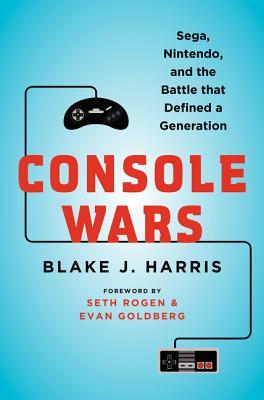
Book Review: Console Wars: Sega, Nintendo, and the Battle That Defined a Generation

Console Wars Book

Rating: 4 stars

Following the success of The Accidental Billionaires and Moneyball comes Console Wars–a mesmerizing, behind-the-scenes business thriller that chronicles how Sega, a small, scrappy gaming company led by an unlikely visionary and a team of rebels, took on the juggernaut Nintendo and revolutionized the video game industry.

In 1990, Nintendo had a virtual monopoly on the video game industry. Sega, on the other hand, was just a faltering arcade company with big aspirations and even bigger personalities. But that would all change with the arrival of Tom Kalinske, a man who knew nothing about videogames and everything about fighting uphill battles. His unconventional tactics, combined with the blood, sweat and bold ideas of his renegade employees, transformed Sega and eventually led to a ruthless David-and-Goliath showdown with rival Nintendo.

The battle was vicious, relentless, and highly profitable, eventually sparking a global corporate war that would be fought on several fronts: from living rooms and schoolyards to boardrooms and Congress. It was a once-in-a-lifetime, no-holds-barred conflict that pitted brother against brother, kid against adult, Sonic against Mario, and the US against Japan.

Based on over two hundred interviews with former Sega and Nintendo employees, Console Wars is the underdog tale of how Kalinske miraculously turned an industry punchline into a market leader. It’s the story of how a humble family man, with an extraordinary imagination and a gift for turning problems into competitive advantages, inspired a team of underdogs to slay a giant and, as a result, birth a $60 billion dollar industry.

Reading this book was a nostalgic experience. Growing up, one of the first video games I ever played was Sonic the Hedgehog. I remember it as if it happened just yesterday and ever since, I loved video games. So reading this book was quite an experience for me.

But I didn’t enjoy it just for nostalgic reasons either. Console Wars took me into the world of Sega and Nintendo, introduced me to the people who made both companies a success, and made me even more enthralled with the video game universe. I enjoyed it because this book was very real to me. I felt as if I experienced both company’s success right in front of me as everything was happening. From seeing Kalinske resurrect Sega from the ground up to Nintendo taking the video game industry back by storm with the release of Donkey Kong Country on the SNES. I felt as if I was in the video game world, meeting all of the key players who made the video game industry thrive.

I also enjoyed Console Wars because there was a lot of thought put into writing it. Harris put a lot of research into this work, interviewing people from Nintendo and Sega who were a part of the video game industry during that time. Having this information made reading this book that much more enjoyable, allowing the reader a better understanding of how the video game industry came to be so popular in the world today. It also allowed me a glimpse into their lives, seeing everything in the video game industry in a completely different light.

The one downside to this book was the pacing. When I first started reading it, I really dived into the story, marveling at all of the little details and feeling nostalgic. But as I continued reading, I sometimes found myself slowing down, not wanting to continue. Not because I didn’t find what I was reading to be interesting, but because I found the pacing to be extremely slow at times. I found myself to be really interested in what I was reading, but found some of the conversations had between rival key players to be unrealistic. Or I’d find myself overwhelmed with the information presented to me to where I’d need to take a break from reading. Then, there were also times where transitioning from one company to the next was completely awkward. There were a lot of instances where the story went from conversations going on at Sega to all of a sudden being with the guys at Nintendo without any sort of warning. At the beginning of chapters, I understood it and was completely fine with it. But when it happened from one paragraph to the next, it was a little weird sometimes.

Console Wars was a very enjoyable read that reminded me of my childhood. Of the many days I spent playing video games, having fun and just being a kid.

Book Review: A Girl’s Guide to Moving On

A Girl's Guide to Moving On Book Cover

Rating: 3 stars

When Nichole discovers that her husband, Jake, has been unfaithful, the illusion of her perfect life is indelibly shattered. While juggling her young son, a new job, and volunteer work, Nichole meets Rocco, who is the opposite of Jake in nearly every way. Though blunt-spoken and rough around the edges, Rocco proves to be a dedicated father and thoughtful friend. But just as their relationship begins to blossom, Jake wagers everything on winning Nichole back—including their son Owen’s happiness. Somehow, Nichole must find the courage to defy her fears and follow her heart, with far-reaching consequences for them all.

Leanne has quietly ignored her husband’s cheating for decades, but is jolted into action by the echo of Nichole’s all-too-familiar crisis. While volunteering as a teacher of English as a second language, Leanne meets Nikolai, a charming, talented baker from Ukraine. Resolved to avoid the heartache and complications of romantic entanglements, Leanne nonetheless finds it difficult to resist Nikolai’s effusive overtures—until an unexpected tragedy tests the very fabric of her commitments.

An inspiring novel of friendship, reinvention, and hope, A Girl’s Guide to Moving On affirms the ability of every woman to forge a new path, believe in love, and fearlessly find happiness.

 I really enjoyed reading this book. The plot wasn’t too complicated and the story was a breeze to get through. I enjoyed reading about Nichole and Leanne moving on from their previous marriages, doing the best they could on their own.

I also enjoyed reading A Girl’s Guide to Moving On because of the characters. I found I really enjoyed Nichole and Rocco as a couple, Rocco’s relationship with his daughter Kaylene, Shawntelle and Leanne.

What I enjoyed about Nichole and Rocco as a couple was their conversations. I found myself laughing almost every time they were talking to each other and I could see how their relationship continued to bloom.

I also enjoyed the relationship between Rocco and his daughter Kaylene. I honestly expected Kaylene to be a typical cliché teenager, always doing everything against her father’s wishes. Instead, Kaylene and Rocco’s relationship throughout the book is a respectful one. They had their moments when they weren’t completely okay with each other, but those moments were few and far between that they were hardly noticeable. These moments occurred when it came to Kaylene’s fashion choices so usually Nichole had to step in, but they weren’t overblown and drawn out and actually brought Kaylene and Rocco closer together.

I also enjoyed Shawntelle and Leanne as characters. I found Shawntelle’s character to be very enduring because I found her to be the type of friend Nichole needed. Shawntelle is blunt and straight to the point where she says whatever is on her mind, not caring what others think of her. She really made me smile while reading this book because you could tell how much she cares about Nichole. I also enjoyed Leanne as a character, both with regards to her relationship with Nichole and everyone else in the story. My heart really went out to her while reading this book because she’s very selfless, yet was put in situations that hurt her relationship with Nikolai.

To be honest though, Leanne’s relationship with Nikolai was one of many things I didn’t enjoy while reading this book. I liked Nikolai as a character because I could tell he really cared about Leanne, but he got jealous too easily of Leanne’s ex-husband Sean. Every time Leanne was kind to Sean in any way, Nikolai usually flipped out about it because he wasn’t completely okay with Leanne still having some love in her heart for her former husband even though she was married to him for most of her life. To the point where their relationship felt too unreal to me. I know Nikolai loves Leanne, but he got jealous of her former husband every time she interacted with him and it always resulted in their relationship falling apart. But then he’d always come back conveniently right when she needed him, apologizing for his behavior and telling her how much he loves her. And I know relationships aren’t perfect and people make mistakes. But I always felt like their relationship fell apart the moment Sean was mentioned, which bothered me. It made it hard for me to see both of them together and believe they were meant to be.

Another aspect of A Girl’s Guide to Moving On I didn’t enjoy was how easily manipulated Nichole and Leanne were by their former husbands. I get they both still cared about their ex-husbands despite everything they put them through, but I found it to be too much sometimes. Especially because it resulted in their new relationships falling apart, despite how much Nichole and Leanne cared about their new boyfriends. This aspect of the novel bothered me a lot because it showed they weren’t ready to be in another relationship, yet they both got themselves romantically involved with another person anyway, as if that was the only way they’d be able to physically move on from their failed marriages.

I was also bothered when reading A Girl’s Guide to Moving On because it lacked a lot of plot and character development. Yes, the plot wasn’t overly complicated which made it enjoyable to read. But, I felt as if the conflicts in the story were too easily resolved with very little actually being done to resolve them. One example is the moment Jake threatens Nichole’s relationship with Rocco and her being able to have their son Owen. She makes the mistake of doing something that hurts her relationship and calls one of her sisters to find out what to do. But the solution to this conflict was a simple one that she could’ve done in the first place and that would’ve saved her a lot of heartache. It made me emotionally sad to see her character in this situation, but I felt like she could’ve avoided a lot of the pain she inflicted on herself. And that really bothered me because there were a lot of moments in this book that I felt certain situations could’ve been avoided.

There also wasn’t a lot of character development too. Both Jake and Sean learned from their mistakes so I saw some character development from them but I didn’t feel like Nichole and Leanne changed all that much in the story. Yes, Nichole and Leanne both stood up to their ex-husbands a couple of times in the story, but they were still being manipulated by them until Rocco and Nikolai intervened.

But I found A Girl’s Guide to Moving On overall to be a simple and enjoyable read. I enjoyed a lot of aspects about the book and would’ve loved to have given it a higher rating. Unfortunately, there were too many things with this story that were lacking, but I still enjoyed reading it nonetheless and hope others have enjoyed it too.

Blog at WordPress.com.

Up ↑