Search

Rainy Day's Books, Video Games and Other Writings

Category

young adult

Book Review: Tangleroot

Rating: 3.5 stars

Noni Reid has grown up in the shadow of her mother, Dr. Radiance Castine, renowned scholar of Black literature, who is alarmingly perfect at just about everything.

When Dr. Castine takes a job as the president of the prestigious Stonepost College in rural Virginia, Noni is forced to leave her New England home and, most importantly, a prime internship and her friends. She and her mother move into the “big house” on Tangleroot Plantation.

Tangleroot was built by one of Noni’s ancestors, an enslaved man named Cuffee Fortune―who Dr. Castine believes was also the original founder of Stonepost College, and that the school was originally formed for Black students. Dr. Castine spends much of her time trying to piece together enough undeniable truth in order to change the name of the school in Cuffee’s honor―and to force the university to reckon with its own racist past.

Meanwhile, Noni hates everything about her new home, but finds herself morbidly fascinated by the white, slaveholding family who once lived in it. Slowly, she begins to unpeel the layers of sinister history that envelop her Virginia town, her mother’s workplace, her ancestry―and her life story as she knew it. Through it all, she must navigate the ancient prejudices of the citizens in her small town, and ultimately, she finds herself both affirming her mother’s position and her own―but also discovering a secret that changes everything.

I received a digital copy of this book through the publisher on NetGalley for an honest review.

Tangleroot is a coming-of-age young adult literature story centered around a young black woman who is trying to do things on her own while feeling pressure from her mother to follow in her footsteps. When Noni first moves into this town in Virginia to live on the Tangleroot plantation with her mother, she’s not at all happy to be there and it’s very plain to see. As the story goes on and she begins uncovering more information about her family’s history, Noni realizes she’s exactly where she needs to be and uncovers the truth regarding her family’s relatives that will change everything she and her mother believed they knew.

What Tangleroot does well is provide you with an intriguing story that takes place in a town that you want to learn more about. While this book initially started slow for me, as the story went on, I found myself becoming more interested in hearing Noni’s story. I especially enjoyed Noni learning more about her family history and being able to uncover facets of her family’s ancestry that not even her mother was able to uncover. This aspect of the book was interesting to read about because I felt that while her character is fictional, I felt like the process she undergoes to find out more about her relatives is realistic.

I also found the setting of this small town to be very interesting and wanted to learn more about the town and the people in it. And I feel like this book delivers by providing the reader with a wide cast of characters each with their own stories. With how descriptive this book was, I felt like I was with Noni as she navigates this new unfamiliar place being surrounded by people who don’t know her but have opinions of her because of her mother.

What I also enjoyed about reading this book is how well Tangleroot does in discussing important subject matters such as racism and the role it plays both in the past and in the present day. You see this through Dr. Castine’s experiences with dealing with the school board at Stonepost College, through Noni’s interactions with some of her coworkers at Charm, and even when Noni finds out more about her relative Lacey Castine. As someone aware of her privilege, whenever I read stories like Tangleroot, I’m reminded how fortunate I am to be white. Books like this one also help me gain more knowledge and understanding regarding the struggles minorities go through regularly just because of the color of their skin. And help me sympathize with what’s going on since I know I’ll never be able to understand since it’ll never be my experience.

If there’s anything about Tangleroot I didn’t particularly enjoy it would have to be Noni’s relationship with her mother. It felt like no matter what Noni does here, it’s never enough for her mother. It feels like she’s never happy with any of the decisions Noni makes when they move into the Tangleroot plantation. And I feel like the tough relationship they have with each other is never really discussed either because Noni just ends up doing whatever her mother wants her to do even if it ends up not being what she actually wants. I understand she’s trying to live up to her mother’s expectations, but she never stands up to her mother in this book whenever they are in conflict with each other. I struggled with reading about their relationship because I felt like it shouldn’t have been this way, especially since Noni is old enough in this book to make decisions for herself. And Noni just deals with it, never says to her mother how she feels about things, which wasn’t okay for me.

Overall though, Tangleroot was a wonderful read that I highly recommend. I recommend it to anyone who enjoys reading coming-of-age stories, young adult literature, and historical fiction. Tangleroot was published on October 15, 2024, for anyone interested in reading this book. 

Manga Review: Is Love the Answer?

Rating: 4 stars

A poignant coming-of-age story about a young woman coming into her own as she discovers her identity as aromantic asexual. A complete story in a single volume, from the creator of “Mine-kun is Asexual.”

When it comes to love, high schooler Chika wonders if she might be an alien. She’s never fallen for or even had a crush on anyone, and she has no desire for physical intimacy. Her friends tell her that she just “hasn’t met the one yet,” but Chika has doubts… It’s only when Chika enters college and meets peers like herself that she realizes there’s a word for what she feels inside–asexual–and she’s not the only one. After years of wondering if love was the answer, Chika realizes that the answer she long sought may not exist at all–and that that’s perfectly normal.

I first heard about this manga from a fellow book blogger on WordPress that I follow called The Book Raven. She had written such a wonderful review of this manga about a subject that I feel like I still need to learn more about that made me decide to check it out for myself to see if I’d enjoy it just as much as she did.

And let me tell you, Is Love the Answer? didn’t disappoint. It was a simple short manga telling the story of young Chika who’s always felt different from her peers because of never having fallen in love with another person. She had a lot of doubts, wondering if there was something wrong with her and wanting to know why she didn’t feel the way about romance her high school peers did. It’s only when she goes to college and meets people who’ve had somewhat similar experiences that she discovers the word for her experience and begins to question what love looks like for her and what that means.

I enjoyed reading this manga because of how relatable the character Chika is to me. While I don’t completely have the same experiences when it comes to love that Chika does, I felt like I could relate to her character because, for the longest time, it took me a while to pinpoint for myself how I develop feelings for people when it came to any of my relationships in my life. Like Chika, I struggled to identify how I feel when it comes to romantic relationships. And also like Chika, when I learned what that was for me, I also found myself curious and wanting to look more into it to see if it’s something I truly identified with or not. So for me, this book was a good read because it helped me feel validated about my experiences and also learn more about asexuality and what that means and looks like for those who identify as asexual.

What I also enjoyed when it came to reading Is Love the Answer? was learning more about different sexual identities that fell under asexual. I felt like I read about a lot of terms I hadn’t heard of before which has made me want to look further into them just so I can know even more about them. I also enjoyed this aspect of this manga because along with seeing those terms, there were characters in this story that identified as them too so that allowed me as a reader to see how those sexualities can potentially look.

If I had to choose anything from this manga that I didn’t particularly like, it would have to be how short of a read it was for me. I finished this manga in one sitting and was sad about it because of how much I was enjoying what I was reading. I wish it was a little longer because I wanted to continue seeing Chika learn more about herself and see her relationships with the friends she made along the way develop more.

But as a whole, Is Love the Answer? was an enjoyable manga to read. I haven’t read too many mangas in my life, nonetheless any recently that I’ve decided to review here on my blog. But I really enjoyed this one and highly recommend it, especially for anyone part of the LGBTQ community and anyone who wants to read young coming-of-age story about a young woman coming into her own identity.  

Thank you so much for stopping by and reading my review of Is Love the Answer?! If you enjoyed my review of this manga, don’t hesitate to share your thoughts in the comments below or check out another one of my blog posts.            

Book Review: #Unwell

Rating: 2 stars

Seventeen-year-old Nathan Gutierrez and his occasional crush, Oliver, plan to quit social media. Forever. Not that they’ll be missed – their only followers are friends and family.

But before he deletes the app, Nate captures the perfect shot of a fight between two popular girls at school. One upload later, his popularity skyrockets. Nothing gets views faster than pretty girls pulling hair and clawing eyes.

While most influencers are beacons of false positivity and saccharine platitudes, Nate goes the other way. He becomes an #unwellness influencer.

Want to be angry? Go for it. Don’t feel like sleeping? Stay awake. Hold a grudge? Follow your heart.

Nate’s popularity surges as he turns his high school into a buffet of sickening sandwiches, insomnia, and rage. His followers become judge, jury, and executioner. It’s all going so well–

Until someone steals his account.

The uploads change. Now, they’re not just defiant; they’re sinister and suicidal. It’s only a matter of time before someone dies.

Not that his audience cares. They’ve grown rabid. And now they’re coming for Nate.

#Unwell is YA and the first book by LGBTQ author Cameron Stone.

I received a digital copy of this book through NetGalley in exchange for an honest review.

#Unwell is a story of what happens when teenagers spend way too much time caring about followers on social media than about making actual meaningful connections and friendships. It’s a story told from the perspective of Nate, an average guy in high school who’s only connections are with his best friend Oliver, his younger brother Steve and his mother who happens to be a model. Until one fateful day, two of the popular girls at his school get into a physical fight and he posts the fight online, which instantly gains him millions of followers.

What I enjoyed about reading #Unwell was the accuracy when it comes to how some people act when it comes to social media. Nate is a character who acts like a typical teenager whenever he’s unable to glance at his phone for more than five minutes. He’s also a representation of what happens whenever someone lets their five minutes of social media fame get to their head. He literally becomes glued to his phone once he becomes popular, caring more about how many people watch the videos he posts instead of spending time with his one friend and his younger brother and mother.

Speaking of his brother and mother, they were the only characters in this story that I enjoyed getting to know whenever Nate took the time out of his day to talk or spend time with them. I especially enjoyed his relationship with his mom because she had a lot of wisdom to offer him that he should’ve taken to heart. I liked his relationship with his younger brother Steve because while he was annoying, I could see how much he cared about Nate. I also love that he wasn’t quite as obsessed with social media as Nate was throughout this book. I liked his relationship with Oliver at one point, but that quickly ended for me when he gets Nate into trouble but also because he’s responsible for a lot of the trouble Nate ends up finding himself in once his account gets stolen from him.

Another aspect of #Unwell I enjoyed was the overall atmosphere of the story. I felt like there was quite a lot of tension in this book and there were several moments in the story where things really picked up that made me interested in finding out what was going to happen next. While the overall story telling in this book isn’t the best (which I’ll get more into momentarily), I found when things were really tense for Nate, they were REALLY tense. To the point where I kept waiting for something else terrible to happen.

Now onto the aspects of this book I didn’t enjoy. I’d like to start by saying that while I enjoy the commentary this book makes regarding social media, I felt like I had to hold my disbelief regarding Nate’s popularity on ChitTalk, the social media app where he gained his millions of followers. First because of it being due to the fight at his school but also because of what happens when he posts his second video of that ridiculous sandwich that results in him throwing up. I have a hard time believing that his classmates saw that video and then decided to make their own chicken sandwiches with the chicken being the bread on the sandwich. While I understand that it was supposed to show how easily people are influenced by people on social media, I found the whole thing ridiculous and hard to suspend my disbelief. I also found a lot of the other videos Nate posts in this book very stupid and had a hard time understanding how they gained as much traction as they do.  

I also had a difficult time wrapping my head around the fact that his peers at his high school didn’t know that account belonged to him until it had been stolen from him. And even more so that once that happens, how his followers act to the news that his account has been stolen. That whole chain of events I felt like while was an interesting concept, it was executed poorly. There’s very little explanation given as to why people think Nate was abducted and a clone was taking over his ChitTalk channel and even less of an explanation as to why those following his account were taking very unnecessarily dramatic matters regarding his “clone.” Won’t go into any more details than this because I’m still wrapping my head around how stupid that was and didn’t make any sense. And even more frustrating is that there isn’t any real explanation for any of it.  

Another thing with #Unwell I strongly disliked was Nate and Oliver’s characters. As individual characters, neither Nate nor Oliver were interesting people. If anything, I felt like they were both really boring people who had no personality in this book other than both their obsessions with ChitTalk. I feel like it was just by chance that Nate gained popularity on ChitTalk and not due to having a likeable personality. And then the one thing about them I thought was interesting was destroyed mercilessly. Like I said earlier, I originally was intrigued about their relationship. But once the kiss and restaurant scenes happen and you discover Oliver’s involvement in Nate’s account being stolen, what interest I had in their relationship quickly vanished. I was disappointed by this because I found their relationship with each other interesting and wanted to see how it would continue to develop. But doesn’t sound like it would’ve worked out anyway because of Nate’s uncertainty regarding his interest in Oliver, which when I look back on it makes sense because of the way Nate acts around Oliver throughout this book. Very frustrating and made me dislike both these characters even more.

Overall, #Unwell is an interesting read with commentary regarding what happens when someone lets social media fame get to them. But with the number of times I had to suspend my disbelief over an unlikeable character like Nate becoming popular on social media and how his followers react to his account being stolen, I have a hard time calling this book an enjoyable read for me.

Thank you so much for stopping by and reading my review of #Unwell! If you enjoyed my review of this book, don’t hesitate to share your thoughts in the comments below or check out another one of my blog posts.   

Book Review: Nightshade Trilogy

So I decided with this trilogy since I’ve finished reading all three that I would just do one blog post reviewing all three of them in order and talk about my thoughts on each book. So without any further introductions, below are my reviews of the Nightshade trilogy.

Nightshade (Nightshade #1)

Rating: 3 stars

Calla is the alpha female of a shape-shifting wolf pack. She is destined to marry Ren Laroche, the pack’s alpha male. Together, they would rule their pack together, guarding sacred sites for the Keepers. But then, Calla saves a beautiful human boy, who captures her heart. Calla begins to question everything – her fate, her existence, and her world and the orders the Keepers have asked her to follow. She will have to make a choice. But will she follow her heart if it means losing everything, including her own life?

So what I have to say about Nightshade is that I do enjoy it as a whole. However, there are some aspects to this first book in the trilogy that I hated, which is why my rating isn’t quite as high. But before I get into any of that, let me talk about what I like about this book.

I really enjoyed the world building that takes place in this book. You learn there’s packs of wolves, but they are known as Guardians as they were created as protectors of Keepers, the ones who give the Guardians orders and are basically in charge of their lives. In this trilogy, you learn about how the Guardians first came into existence and what their role is in protecting the Keepers. And I really enjoyed it because you get to see how the dynamic plays out between these two groups from Calla’s perspective when she’s attending school. I also enjoyed seeing the dynamic between Calla’s pack, Nightshade and Ren’s pack Banes when the two of them decide to begin the process of getting the packs together before their nuptials. I felt like it gave me as a reader insight into what life with a pack of wolves would look like in these books. I also enjoyed it too honestly because of wolves being my favorite animal and reading a trilogy that has my favorite animal in them.  

I also enjoyed most of the characters in this book. In particular, I enjoyed seeing Calla’s relationship with Shay and Ren as well as the members of the pack. What I enjoyed about her relationship with these two guys was how different they were. So with Shay, you initially believe he’s an outsider to the world Calla has grown up in. However, you quickly realize he actually has a whole lot to do with the world she’s been a part of since birth. You also see Calla do a whole lot of rule breaking when it comes to Shay throughout the book with regards to what she’s allowed to do as a Guardian. From saving Shay’s life in the beginning to reading a book that talks about the true history of the Guardians and Keepers, Calla does a whole lot of things she’s not supposed to since she first meets Shay, things that not only put her pack in jeopardy but if discovered could turn her whole world upside down. Then there’s Ren, the alpha of the Banes and the man Calla has been chosen to marry in order to bring their two packs together. He comes across as confident, a leader and charming. I enjoyed seeing him and Calla’s relationship develop as I felt like I could see how much he truly cares about Calla. I also enjoyed their relationship because I could see the chemistry between the two of them in the interactions they had. What I enjoyed about Calla’s dynamic with the two packs was how well when her and Ren joined them together they all seemed to get along. They worked really well as a team, and I was interested to see how their dynamic would continue to develop.

So with Nightshade what I struggled with when reading was the double standards when it came to Ren and Calla with regards to their relationship. What I mean is that Calla was expected before their wedding to basically save herself for Ren for their wedding day. As a female alpha, she was basically expected to not participate in any intimacy with him before their wedding or anyone. Ren, however, as a male alpha, didn’t have such expectations placed on him. In fact, Calla mentions him having dated several of the girls at their school and that was seen as being okay since he’s an alpha male. And even though Calla is also an alpha, she gets told by her mother in this book that if an alpha male wants something from her, she’s to accept it even if she belongs to another. So even though Calla is supposed to be an alpha to her pack, she’s only one in name. And these double standards played a prominent role through this book so much that I couldn’t give this book a higher rating than 3 stars because I hated them so much. Overall, I enjoyed reading Nightshade though and can’t wait to share my thoughts on the next book in the trilogy, Wolfsbane.

Wolfsbane (Nightshade #2)

Rating: 3 stars

Calla Tor wakes up in the lair of the Searchers, her sworn enemy, and she’s certain her days are numbered. But then the Searchers make her an offer–one that gives her the chance to destroy her former masters and save the pack–and the man–she left behind. Is Ren worth the price of her freedom? And will Shay stand by her side no matter what? Now in control of her own destiny, Calla must decide which battles are worth fighting and how many trials true love can endure and still survive.

What I enjoyed when reading Wolfsbane was the continued world building that Nightshade did a wonderful job of starting the foundation on. In this book, you get the full story behind the Searchers who are seen as the enemies of the Keepers and find out the truth of their role in Calla’s world. We are introduced to their group and get to see their hideout and meet a cast of characters I found I immediately liked. A lot of this book involves explaining what’s going on to Calla so that she and Shay can help the Searchers in their quest, and I was perfectly fine with it because it gave me a wonderful idea of what was going on. I also enjoyed getting to see the Searcher’s hideout and finding out what role each of their members I was introduced to played.  

I also enjoyed how quickly the plot moves in Wolfsbane. After the events in Nightshade, everything in Calla’s world with regards to her pack has completely changed and Calla will need the help of the Searchers in order to rescue her pack and Ren. I enjoyed this plot because Calla and Shay were working with the group of people Calla had once considered her enemies in order to save those she loved. And it was nice to learn more about their world while planning their rescue of Calla’s pack as I felt like I learned a lot about the Searchers here that I didn’t already know.

I will say though that although I did enjoy reading Wolfsbane immensely due to the world building and what I learned about the Searchers, there’s several aspects of the story I wasn’t quite pleased with. Mainly that I felt like I was gaining more insight into Ren’s character without knowing it even though he was largely absent from this book in the trilogy until the end of it. I didn’t like that Ren wasn’t in this book all that much because I found that I didn’t like Shay’s relationship with Calla quite as much as I originally had when reading Nightshade. I think a big part of it was me struggling to see their attraction for each other but also because of how much Shay was actually starting to annoy me. I don’t know if a large part of it is because of him being the Scion and ever since he gets labeled that here, his character doesn’t go through any sort of development or because of how little support he shows in Calla going to save her pack. He basically writes off the members of her pack as being a casualty of war and is annoyed that they are spending any time going to save them, even though most of the members of her pack he has a wonderful relationship with. I know part of it is because of him not wanting Calla to put her life in jeopardy, but I feel like he was being selfish and showing he didn’t care about her pack who she sees as like family to her. And that made me annoyed with him here because I don’t see why he couldn’t have just supported her considering how much she’s done for him since they met. I also feel like what also played a role in me feeling this way is that I don’t think I enjoy insta-love with characters all that much as I don’t feel like you get as much chemistry between the characters in the relationship and you don’t get a full picture as to why they’re attracted to each other, which I feel like became a problem for me when reading this book as I found myself not understanding Calla’s attraction to Shay.  

What I also didn’t enjoy in Wolfsbane was that I felt like a lot of characters get killed off for no reason. I found this happened through out the book when Calla and the Searchers made their rescue attempts of her pack as during both attempts, characters were killed off that I don’t feel like should’ve been. Especially when as the reader you find out one of the characters killed off is related to someone else in the story and that what that character has been told about their parents is a complete lie. I found this character being killed off in particular bothered me because they were never given the chance to get to know/develop a relationship with their child and I feel like this character actually could’ve played a more critical role in the story instead of being introduced in this book and then killed off a little later. Overall though, I did still enjoy reading Wolfsbane despite these two issues I had with it and was excited to see how this trilogy would come to an end in Bloodrose.

Bloodrose (Nightshade #3)

Rating: 3 stars

Calla has always welcomed war.

But now that the final battle is upon her, there’s more at stake than fighting. There’s saving Ren, even if it incurs Shay’s wrath. There’s keeping Ansel safe, even if he’s been branded a traitor. There’s proving herself as the pack’s alpha, facing unnamable horrors, and ridding the world of the Keepers’ magic once and for all. And then there’s deciding what to do when the war ends. If Calla makes it out alive, that is. In this remarkable final installment of the Nightshade trilogy, international bestselling author Andrea Cremer crafts a dynamic novel with twists and turns that will keep you breathless until its final pages.

As a whole, what I enjoy about Bloodrose is the pacing of the story with the action. I enjoyed how quickly the story moves along as everyone works together to collect all of the pieces of the Cross in the final fight against Bosque Mar. This action kept me engaged in wanting to find out what would happen next in this final installment in the trilogy as I wanted to know how this war would finally end. I also enjoyed the final fight because you get to see everyone working together to take down their enemies and there was a lot of action during it that I enjoyed getting a front row seat to. There are some aspects to the final battle I didn’t enjoy as well, but I’ll get into that a little later here.

What I also enjoyed in this book was Ren’s return. In Wolfsbane, you find out so much about his character even though you don’t see him again until the end of the book when Calla and the Searchers save her pack. And the way things end with him and Calla in that book made me wonder what was going to happen at the beginning of Bloodrose as its predecessor ends with her going to save him and convince him to join her and the Searchers. I also enjoyed seeing him return because you saw a little bit more of his relationship with Calla and you get to see his relationship with Adne begin.

In general, I also enjoyed seeing the relationships between the side characters of the story, particularly Ethan and Sabine and Connor and Adne. I enjoyed both of these relationships because I wasn’t expecting to really read too much about either of them but was happy that Andrea Cremer gave some of the other characters’ relationships that I could read about. I also enjoyed them because while I didn’t particularly care for Sabine too much when I first read Nighshade, once I’m given her backstory, I find myself liking her more and wanting happiness for her in these books. And what she ends up doing at the end for Calla’s brother really warmed me up for her even more because I knew that was probably a tough choice for her to have to make.

Now to get into the aspects of Bloodrose I didn’t enjoy. One aspect of the story I didn’t particularly care for here was the continued love triangle between Calla, Shay, and Ren. Mostly because even though I didn’t want to admit it, I knew who she was going to choose since I started reading this trilogy. I didn’t want to admit it to myself because she still seemed uncertain in this book who she wanted to be with so I found myself hopeful that she might make a different choice. But nope, she chooses the guy I felt like she had the least chemistry with out of the two and then to make things worse, she never tells the other guy that she’s made her decision. She also spends very little time with him in this book as well, which disappointed me because I was looking forward to seeing more of him and their relationship even though I knew she wasn’t going to choose him because I found their chemistry and interactions together so enjoyable to read. And then to make things even worse here, Cremer kills him off during the fighting and very little grief is actually shown by Calla and everyone regarding his death. Also the guy she does end up choosing shows more concern that his competition’s death will change the way Calla feels about him instead of being concerned that Calla is okay. But when he died, I cried because I felt like he wasn’t given a fair shot in this trilogy at all. He went through a lot of development in these books only to end up dead in the end when I felt like he should’ve been given the chance to live. Even if Cremer had him with someone else, I would’ve preferred that happening here over him dying the way he does, not knowing that Calla isn’t going to choose him.

What I also didn’t particularly care for with regards to Bloodrose is how this trilogy ends. I like the full circle aspect of it as once the rift is sealed, the Keeper’s magic can no longer be used for these purposes again and the Guardians will revert to their true selves. But everything else with it I wasn’t too pleased about, mostly because I feel like there’s so many loose ends that don’t get tied up here. One example that comes to mind would be if the rift were to open and Bosque Mar returned. With the way this book ends, Shay would be no help whatsoever here. Also don’t necessarily know what would happen here if that were to happen. Another loose end that doesn’t get tied up is now that the war is over, what the current state of their world is. Because Keepers still see the Searchers as their enemies and the Guardians that weren’t helping out the Searchers would more than likely be confused since they can no longer shift back and forth between forms. I believe some of the Keepers were sucked into the rift along with Bosque Mar but wonder about the ones that weren’t what’s going to happen with them. Also with the Searchers, since they’ve now accomplished their main mission, what will they be doing next. I feel like all of these are valid things that this book didn’t address that I feel like it should’ve and that made me not enjoy the way this book ended and this book in the trilogy overall.

Overall, I enjoyed reading the Nighshade trilogy as a whole, even though there was something in each book in the trilogy I didn’t particularly care for that made me not like the book as much as I wanted. I found each of these books intrigued me enough to continue reading to find out what would happen next, enjoyed seeing the dynamic in the love triangle between Calla, Shay, and Ren until I didn’t, enjoyed the overall story and lore as I felt like there was a lot that happened that interested me and made me fascinated with the world I was reading about and enjoyed getting to know these characters and their story. I know there are other books that the author has written that pertain to this world (a prequel series and what looks like a series that takes place after this trilogy) that I might consider giving a read just because of how much I enjoyed this trilogy. But with the way things ended in Bloodrose, I feel like I need a break from these books right now before I pick up other books by this author in this world.

Thank you so much for stopping by and reading my review of the Nightshade trilogy! If you enjoyed my review of this trilogy, don’t hesitate to share your thoughts in the comments below.

Book Review: A Place for Vanishing

Rating: 4 stars

A teen girl and her family return to her mother’s childhood home, only to discover that the house’s strange beauty may disguise a sinister past, in this contemporary gothic horror from the author of What We Harvest.

The house was supposed to be a fresh start. That’s what Libby’s mom said. And after Libby’s recent bipolar III diagnosis and the tragedy that preceded it, Libby knows she and her family need to find a new normal.

But Libby’s new home turns out to be anything but normal. Scores of bugs haunt its winding halls, towering stained-glass windows feature strange, insectile designs, and the garden teems with impossibly blue roses. And then there are the rumors. The locals, including the mysterious boy next door, tell stories about disappearances tied to the house, stretching back over a century to its first owners. Owners who supposedly hosted legendary masked séances on its grounds.

Libby’s mom refuses to hear anything that could derail their family’s perfect new beginning, but Libby knows better. The house is keeping secrets from her, and something tells her that the key to unlocking them lies in the eerie, bug-shaped masks hidden throughout the property.

We all wear masks—to hide our imperfections, to make us stronger and braver. But if Libby keeps hers on for too long, she might just lose herself—and everyone she loves.

This book was an interesting read to me as I wasn’t expecting this story to get as dark as it does. A Place for Vanishing has a lot of unique aspects to its story. There’s the house, which has a very dark history with the mystery of why people who live in the home never come out. The story behind these disappearances is very grim, not for the faint of heart and Ann Fraistat does a wonderful job painting a picture in intricate detail behind the history of the house. There’s also the characters in the story, from Libby with her bipolar III diagnosis, her younger sister Vivi and a neighbor a few houses down named Flynn who has a surprising connection to the house in more ways than one. At first, I wasn’t sure how I felt about the characters in the story. But as I kept reading, I found I enjoyed learning more about them as they explored the house and investigated the mystery behind the masks.  

When I initially started reading this book, I struggled as the beginning is very slow moving with building the plot and story. But as the story continues, it goes from slow moving to the plot picking up in ways I didn’t expect. I found this slow build in A Place for Vanishing I actually didn’t mind as the many twists and turns that occurred made up for the slow start. I think what helped was the horror elements throughout. Even though I don’t get scared easily, I found myself at times horrified by the turn of events in this book and continued reading to find out if things would get better. I’m not scared of bugs in the least but believe that if I had the experiences the characters had in this book, I definitely would become scared of them. And the house itself had enough intrigue that made me continue reading to find out what secrets this house had to hide.

Another aspect of A Place for Vanishing I enjoyed was seeing Libby’s character development. She goes from being the character in the story where her mother and sister Vivi had to be careful around because of her condition and the events that lead to them moving into the house to being the person who saves them all from a terrible fate. She goes through so much development in this book, and I enjoyed the way her personal struggles with her health were portrayed. While I don’t personally know anyone with bipolar III, it was great to see mental health representation in this book while everyone in the story is going through a terribly traumatic ordeal. And I love that she’s the one who ends up saving everyone in the story. I also enjoyed seeing the beginning of her relationship with Flynn and that this book didn’t heavily focus on as much as what was going on in the house.

Overall I enjoyed reading A Place for Vanishing as the author did a wonderful job setting the scene for the horrific events to come. While the story started off with a really slow start, once it picked up I had a hard time putting this one down. Highly recommend for anyone who enjoys reading horror as this book will give you some chills. However, anyone who doesn’t enjoy reading about characters dealing with mental health issues and books that mention suicide, doesn’t like horror, and is very easily creeped out by bugs, I would highly steer clear of this book as you more than likely won’t enjoy it quite as much.

Thank you so much for reading my review of A Place for Vanishing! If you liked this post, please check out other posts on my blog and leave your thoughts in the comments below.

Book Review: Always Isn’t Forever

Rating: 3.5 stars

Best friends and soul mates since they were kids, Hart Augusto and Ruby Armenta were poised to take on senior year together when Hart tragically drowns in a boating accident. Absolutely shattered, Ruby struggles to move on from the person she knows was her forever love.

Hart can’t let go of Ruby either…. Due to some divine intervention, he’s offered a second chance. Only it won’t be as simple as bringing him back to life–instead, Hart’s soul is transferred to the body of a local bad boy.

When Hart returns to town as Jameson, he realizes that winning Ruby back will be more challenging than he’d imagined. For one, he’s forbidden from telling Ruby the truth. And with each day he spends as Jameson, memories of his life as Hart begin to fade away.

Though Ruby still mourns Hart, she can’t deny that something is drawing her to Jameson. As much as she doesn’t understand the sudden pull, it can’t be ignored. And why does he remind her so much of Hart? Desperate to see if the connection she feels is real, Ruby begins to open her heart to Jameson–but will their love be enough to bridge the distance between them?

Always Isn’t Forever was an enjoyable read for me from start to finish. I enjoyed that it covered the grief of losing your best friend, but in a way someone who’s never experienced grief can understand. As someone who’s lost my best friend, I felt like I could relate to Ruby’s pain and how she was feeling months after her loss so was able to relate better to her story, as losing someone you thought would always be there with you is a pain I can’t even begin to describe. I enjoyed the paranormal aspect of it in that Hart was given a second chance at life, even though he was in someone else’s body. I feel like it was because I found that aspect of the story interesting and I was curious to see how it all worked. At the same time too though, I find the idea of what happens after death interesting so getting to see a little bit of that (even though its not really all that much when I really think about it) through Hart’s relationship with Lourdes was enjoyable to me as I like the dynamic between the two of them ever since Lourdes was introduced.    

I also enjoyed the characters who played a role in this story, from Hart and the love of his life Ruby to his best friend George to Ruby’s younger sister Gabi. I found it interesting that Ruby and Gabi both had unique intuitions, Ruby through just knowing/feeling when something is going to happen to Gabi’s ability to read tarot cards and never have an incorrect reading. I also loved their relationship with each other because it was nice to see how close they are.

I also enjoyed the story told in Always Isn’t Forever as well. It wasn’t perfect by any stretch of the imagination (which I’ll get into later) but seeing what happened with Hart now in Jameson’s body and Ruby and how death impacted their lives and relationship was intriguing and made me want to continue reading to see what would happen next. I was interested in seeing how he was going to manage to reveal to Ruby who he was without having to say anything and what would happen with their relationship in the end.

There are two things about this book I didn’t enjoy. The first is I didn’t feel like I had good insight into Hart and Ruby’s relationship prior to Hart’s “death.” Like, I understand the two of them were best friends and grew up with each other in their lives. But I felt like I as a reader didn’t get any insight into how they went from being really close friends to realizing they cared about each other as more than friends. I felt like that aspect of their dynamic was completely missing from the story for me and was something I would’ve liked to have seen with their relationship. And I feel like this is something that could’ve easily been done, like whenever Hart was slowly losing his memories for example. I feel like this insight would’ve been nice to have for me to better understand their love for each other because while I can see how much they care about each other, I wanted to see what made them realize there was more to their friendship and the moments leading up to them becoming a couple.

The second aspect of this book I didn’t enjoy was how easily the happily ever after was given to these two characters. Yes, a majority of the book Ruby didn’t realize Hart was actually in Jameson’s body because he was unable to tell her. But I felt like once she discovered the truth, that was it, they were able to get their happy ending without really having to work too much for it. I felt like there was just too little effort put in the ending of this book because he didn’t have to put too much effort into remembering the truth about himself like Ruby had to once the roles were reversed. A majority of the book you spend wondering if Ruby is going to realize Jameson is actually the love of her life before its too late, but then once Hart has lost all his memories, it takes one thing for him to remember himself again and that’s it. And the explanation given for it all felt like a rush to close their story and give them a happy ending with no consequences. Like everything Lourdes says to Hart about him being unable to have his same life again doesn’t truly matter because he and Ruby accomplish it with the only difference being that he’s in another person’s body. And there’s no real explanation given either regarding what makes their relationship different to allow this impossible feat to even happen.

Despite these two aspects to the story I didn’t like, I did enjoy my time reading Always Isn’t Forever. As someone who’s also lost their best friend, I felt like I could relate to what Ruby was going through and was interested to see how everything would come together.

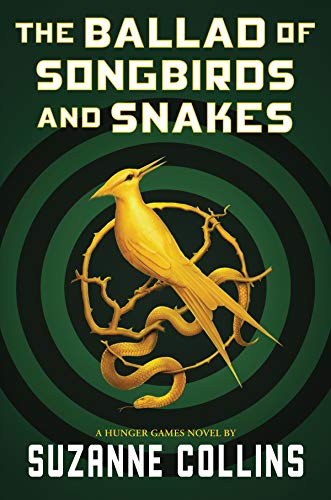
Book Review: The Ballad of Songbirds and Snakes (The Hunger Games #0)

Rating: 3 stars

It is the morning of the reaping that will kick off the tenth annual Hunger Games. In the Capital, eighteen-year-old Coriolanus Snow is preparing for his one shot at glory as a mentor in the Games. The once-mighty house of Snow has fallen on hard times, its fate hanging on the slender chance that Coriolanus will be able to outcharm, outwit, and outmaneuver his fellow students to mentor the winning tribute.

The odds are against him. He’s been given the humiliating assignment of mentoring the female tribute from District 12, the lowest of the low. Their fates are now completely intertwined — every choice Coriolanus makes could lead to favor or failure, triumph or ruin. Inside the arena, it will be a fight to the death. Outside the arena, Coriolanus starts to feel for his doomed tribute… and must weigh his need to follow the rules against his desire to survive no matter what it takes.

To be honest, I haven’t really read too many villain stories in my life. Not because I’ve never been interested in how villains from stories I like became who they are, just haven’t really read any. So with this book, I wasn’t sure what to expect when reading it. As someone who enjoyed reading this series, I didn’t really have too many expectations with this one because I knew the world Katniss and Snow are a part of isn’t a good one. And I knew the problems with the world of Panem started way before Snow was President.

What I found to be enjoyable about The Ballad of Songbirds and Snakes is the Hunger Games that Snow participated in as a mentor and the tribute from District 12 he was paired with Lucy Gray. I thought it was interesting to see how things were in the Capitol during Snow’s youth. I also enjoyed seeing how the Hunger Games were in the beginning verses whenever the trilogy following Katniss started. From the Gamemakers still trying to figure out the Games and how to make them more interesting to students in the Capitol being paired with tributes with an incentive if the tribute they were paired with were to win the Games. I also enjoyed in the beginning seeing the relationship between Snow and Lucy Gray as Snow did what he could to help her survive in the Hunger Games. I enjoyed seeing their dynamic because it was something I wasn’t expecting when reading this book. Lucy Gray just wasn’t the type of girl I was expecting Snow to be interested in so it was interesting to see how their relationship played out.

I felt like as a whole, the first half of The Ballad of Songbirds and Snakes was enjoyable and hard for me to put down as I wanted to find out what would happen next. There was just the right amount of story and getting insight into what was going on in Snow’s world for me to feel like I had a good idea of where the story was heading. I also felt like I was getting a good idea of how Snow became the villain we’ve come to know through some of the choices he made in ensuring Lucy’s victory. The best example that comes to mind for me involves Lucy’s handkerchief as it was a very cunning way to make sure she didn’t get hurt by the snakes during the Games. I also felt like as a reader his thoughts when it came to his peers also helped too because he was already in the mindset of getting ahead of his peers and saying certain things in order to get a specific response from those he was talking to. I basically felt like in the beginning of this book, as a reader I could already see how he became who I came to know from the trilogy.

As The Ballad of Songbirds and Snakes continued after the Games were over though, I felt my interest in what was going on slowly waning. I feel like in a lot of ways it was because what happened after the Games just wasn’t all that interesting to me. Yes, the way things went caught me off guard originally and I was interested to see how things were going for Snow in his life as a Peacekeeper. But I felt like after a certain point of that story, I was just interested in seeing his life leading up to the events in the trilogy instead of getting his story after his stunt as a mentor in the Games. His life as a Peacekeeper was just really dull and I felt like it did nothing for his story other than confirm further how much he cares about the Capitol over anyone and anything. This is demonstrated through the way his relationships with Sejanus Plinth and Lucy Gray end.

As a whole, I found the way Snow’s character develops in The Ballad of Songbirds and Snakes interesting since you can slowly see how he becomes the villain he’s known to be in the trilogy. However, I found his villain story extremely dull once the tenth Hunger Games are over and he’s working as a Peacekeeper in District 12, which made it extremely hard for me to continue reading his story to see what happened next. So while I enjoyed reading this book, there were some elements to it that made it hard for me to enjoy it fully as a villain origin story. I think I would’ve enjoyed it more if once the Games were over, the story focused on his life closer to when the events in the trilogy took place over his life as a Peacekeeper once the Games he participated in as a mentor were over.    

Book Review: The Lightning Circle

Rating: 4 stars

An intimate coming-of age novel for teens, told in verse with delicate line art, chronicling the beauty, magic and transformative power of summer camp, for fans of Elizabeth Acevedo and Judy Blume.

After having her heart broken, seventeen-year-old Nora Nichols decides to escape her hometown and take a summer job as an arts and crafts counsellor at an all-girls’ camp in the mountains of West Virginia. There, she meets girls and women from all walks of life with their own heartaches and triumphs.

Immersed in this new camp experience, trying to form bonds with her fellow counselors while learning to be a trusted adviser for her campers, Nora distracts herself from her feelings, even during the intimate conversations around the nightly campfires. But when a letter from home comes bearing unexpected news, Nora finds inner strength in her devastation with the healing power of female friendship. Presented as Nora’s camp journal, including Nora’s sketches of camp life, scraps of letters, and spare poems, The Lightning Circle is an intimate coming-of-age portrait.

I received a digital copy of this book through the publisher on NetGalley for an honest review.

From beginning to end, I enjoyed reading The Lightning Circle. It was a simple coming of age story about a young girl’s first experience at a summer camp while recovering from a broken heart. Told in verses, the story chronicles what its like as a young teenager during the summer while away at camp.

What I enjoyed about this read was the lyrical style and illustrations. The verses were simple and easy enough as a reader for you to understand what was going on. And the illustrations were simple and went really well with the verses. It felt exactly like I would expect a journal of a young girl to feel like and gave me a good idea of Nora’s thoughts while she was at this camp.

What I also enjoyed about The Lightning Circle was the topics discussed. A lot of this story was told in a way for girls way younger than me to understand, but in a way that you knew what was being talked about without the author having to go into too much detail. The best example that comes to mind for me is whenever one of the young girls Nora is responsible for experiences her period for the first time. When it happened, I knew exactly what was going on without more needing to be said and felt like anyone else reading this book would also know as well.

I also enjoyed seeing these female friendships forming and getting to experience camp life through Nora’s eyes. The way these young girls come together in this story is wonderfully done and I enjoyed getting to read about it. I especially enjoyed the lightning circle moments because that’s when as a reader you see their friendships with each other strengthen and they realize how much they care about each other. I also enjoyed getting to experience camp life through Nora because I myself never went to summer camp, so it was nice to see what it was like for Nora since it was her first time there. It was nice to see it all from her perspective as well because you as the reader can see how her time there changed her.  

If I had to choose anything about this book I didn’t enjoy it would have to be that it felt too short to me. I felt like the story itself was wonderfully done and enjoyed the verse style and the illustrations. However, I wish there had been more in it as I felt like as a reader I didn’t learn all that much about Nora, the other counsellors she met and the girls she was watching over during her time there. Yes, I found out some details about all these characters, but I still wanted more than what I read. I don’t know if its because this book felt like too quick of a read to me or because I didn’t get to see any of how this summer camp experience changed Nora’s life when she returned home. I just know it felt too short to me at times and wish there was more in the story.

But overall, I enjoyed reading The Lightning Circle. It’s a wonderful coming of age story that I recommend to anyone with young children getting close to becoming teenagers who want to read stories about people close to their age. Or to anyone who enjoys reading young adult stories that talk about experiences you’ve had before. The Lightning Circle is coming out on March 26, 2024, for those who would be interested in giving this book a read.    

Blog at WordPress.com.

Up ↑