Search

Rainy Day's Books, Video Games and Other Writings

Category

coming-of-age

Book Review: The Dark Cove Theatre Society

Rating: 4 stars

An aspiring young actor must find her place at a cutthroat arts boarding school in this gothic YA debut for fans of Ace of Spades and If We Were Villains.

Violet Costantino knows she is already on thin ice this school year: her scholarship has taken a significant hit due to her panic attack during her final performance in acting class last semester—which simultaneously shattered her dreams of becoming a leading lady. This year, she is determined to keep her head down and just get through unscathed. But the school seems to have other plans for Violet: to her extreme foreboding, she is cast as one of the leads in the annual Halloween play. What’s worse, the beautiful, infuriatingly talented Frankie Lin and Violet’s ex-crush, Hunter Kinsley, are both cast as her love interests. Despite her initial reluctance, Violet is drawn in by the glamor of the Dark Cove Theatre Society, and she cautiously starts believing that maybe she is cut out for this after all. But lurking in the shadows of Violet’s fragile self-confidence is the rumor of the Society curse, which is said to cause one cast member to drop out before opening night every year, mysteriously and without reason.

In this captivating YA debut, The Dark Cove Theatre Society illustrates both the intoxicating and insidious nature of success and the price we are often forced to pay for it. Passages of found text—glimpses of the school’s handbook, secret letters, and other peeks into life at the Academy—seamlessly woven into the plot will immerse readers even further into the lush, magnetic world of Dark Cove.

I received a digital copy of this book through the publisher on NetGalley for an honest review.

The Dark Cove Theatre Society was a wonderful read that I enjoyed from start to finish. What I enjoyed from reading this book was seeing Violet’s character development from the beginning of being cast in the play to the night of the performance. As a character struggling with anxiety, the last thing Violet wanted to do was star in her school’s annual Halloween play. Nonetheless, be cast as one of the leads in the play. All she wanted to do when returning to school was put her head down and make sure to get through the school year, writing plays instead of acting in them. But seeing her character gain confidence in her abilities in acting was marvelous, and I found myself feeling happy for her growth in this book. Felt like there were a lot of themes covered in this book that Sierra Riley brought into the story that teenagers today could relate to, as some of these teenagers were dealing with.

What I also enjoyed about reading The Dark Cove Theatre Society is the overall setting of the school. I felt like my imagination of this academy went wild while I was reading this book, and I just wanted to learn more about it. It felt like the perfect backdrop for everything that happened in this book, and I was excited to learn more about the classes Violet and her peers were taking. Especially when Violet tried out for the play and found out about the curse every year that causes a student to leave the school before opening night of the play. What also helped with my interest in this school was the way Riley would use newspaper articles from the school from the past that talked about the school, secret letters, etc. It felt like the perfect spooky read to me, with the way the school was set up, from the setting of the book to the curse that affects one of the students in the play every year. Also, I enjoyed learning theatre terminology throughout the book since I’ve never taken any acting classes in school.

If there’s anything with The Dark Cove Theatre Society I didn’t particularly enjoy, it would be how most of the aspects of the story I was looking forward to seeing happened off the page. For example, when you find out the truth surrounding the curse, it doesn’t come as too much of a surprise to me because it seemed like that’s where the story was leading to. But when it comes to how those responsible for it get punished, the reader doesn’t get to see that unfold. You just heard about it through Violet being told that it happened instead of her witnessing it taking place. The same thing happens with the play, too. Yes, you get to see all of Violet’s character growth from the beginning of the story, when she was initially still reeling from what happened the previous school year, to her gaining confidence in herself as the school year goes on, during the practice of the play. But I was also expecting to get to see a little bit of the performance, too, just because of how central it was to the plot of this book. These are the parts of the story that I feel like should’ve been worked on and made the story all the more interesting to read.

I also wasn’t too fond of the romance in this book too just because I feel like there wasn’t enough character development for all of the characters in this book for the romance that does happen to really catch my attention. The only character who gets any development in this story is Violet, but everyone else in this book, from start to finish, acts pretty much the same. Which I don’t necessarily mind because her best friend, Kay, is one of my favorite characters in this book, along with the person who ends up catching Violet’s attention, Fran. All the other characters in this story, though, besides the ones I’ve mentioned, were pretty boring or mean and didn’t add anything to the story for me to care enough about what happened to them. Even the teachers at this academy weren’t great either.

As a whole, though, I enjoyed reading The Dark Cove Theatre Society as I enjoyed seeing Violet’s character development and getting to visit this academy. This book felt like the perfect read at this time of year, and I highly recommend this book to anyone who enjoys reading young adult, dark academia books. The Dark Cove Theatre Society was published on October 7, 2025, for those interested in giving this book a read.   

Book Review: Dive

Rating: 3.5 stars

From the moment Kassandra Conner leaps from the diving board to the moment she hits the water, everything feels in control.

The rest of her life does not.

St. Lawrence Academy is supposed to have everything Kass’s old school didn’t: safe hallways, small classes, and, most important, a chance to dive. But since transferring, all Kass can think about is what’s missing. Like her best friend, Aleah, who’s starting to pull away. Or the comfortable life so many of her classmates enjoy while Kass’s family’s restaurant struggles to stay afloat. Even the excitement she always felt in the pool, now that she’s on the same team as Amber Moore—the best diver in the state, who’s barely said two words to her all year.

Kass feels like she’s drowning, until she meets a boy named Miles. He’s a diver, too—someone who searches through dumpsters in the posh side of town for things he can salvage or sell. Miles knows what it’s like to be boxed in by things you can’t control, and as Kass spends more and more time with him, she starts to wonder what would happen if she tried to break out of her own box—and what she might lose by doing so.

I received a digital copy of this book through the publisher on NetGalley for an honest review.

Dive is a short coming-of-age story from the perspective of a thirteen-year-old girl named Kass who’s going through a lot of changes in her life. This book does a wonderful job of portraying these changes through Kass’s perspective as she struggles to fit in at her new school on the diving team, while still staying in touch with her best friend, Aleah, and realizing the struggles her parents are facing in keeping the family restaurant afloat. Also tells her story in meeting Miles, a boy who also does a type of diving of his own: dumpster diving, and her realization that people have bigger problems to deal with than struggling to fit in at school and make friends.

The main themes in this book’s story are powerful, as Dive is a story teaches you not to judge others by their appearances, that sometimes change can be a wonderful thing, and that you don’t always know what other people are going through. You see these themes sprinkled throughout the story through the choices Kass makes when it comes to her friendship with Miles, and how, as the book goes on, she starts up a friendship with Amber, the girl she sees as the best diver on her team, who didn’t seem approachable to her at the beginning of the book. I enjoyed seeing Kass’s character develop in the story because of her interactions with Miles and how she was able to gain confidence to become friends with Amber and gain confidence to improve in diving.

I also enjoyed seeing her friendship with her best friend, Aleah. At the beginning of the story, Kass was worried about how attending St. Lawrence Academy would change her friendship with Aleah. She was worried that they would end up losing touch just because they weren’t talking as much since Kass attended her new school. But after the salsa night/sleepover at her house with Aleah and Amber, I felt like, if anything, her friendship with Aleah had improved. And I also felt like it showed that while some things in her life changed, her friendship with Aleah wasn’t something that would change just because she was at a different school.

However, while I enjoyed reading Dive, I have some criticisms of this book, too. I felt like there were times when I was taken out of the story because of Kass’s character. For a thirteen-year-old, her voice in the story didn’t come across as her being that age to me. Yes, she didn’t make the best choices in the story, and her actions made her come across as her age. But when it came to her awareness of her parents’ struggling financially and her being aware of others having bigger issues than her, I felt like she had more maturity than I was expecting of her character. Yes, I’m aware that kids have more awareness of things than people tend to give them credit for, but I do feel like her voice in this book has more awareness for someone her age than you’d expect, which made me sometimes forget that she was only thirteen, as her character easily could’ve been a couple of years older.

Speaking of age, though, while I enjoyed her friendship with Miles and enjoyed his character, I also found their friendship problematic. He’s older than her by several years, which becomes a problem in this book pretty early on. Especially because the circumstances Kass meets him from the outside looking in are perceived as suspicious. I know from her talking about him and their interactions in the story that he had no bad intentions when it came to their friendship. But she’s aware, too, that her choice in spending time with him is something the people closest to her wouldn’t be okay with, either, since anytime from the moment she meets him, she’s lied about where she’s going and who she’s hanging out with. This becomes especially apparent when she tells Aleah and Amber about him as well, because they have the reaction you’d expect: concerned for her well-being and worried that he’s taking advantage of her. I feel like having this age gap takes away from the overall message this book was conveying to its readers because their age difference becomes a main conflict in the story that causes problems. I feel like it took away from the main themes in the story by creating conflict with it. I wouldn’t see it as too much of an issue if Kass’s character hadn’t developed feelings for Miles, if Kass were closer in age to him, and if the other characters in the story (such as her friends and family) didn’t have an issue with it.

As a whole, though, I enjoyed reading Dive as I found Kass’s struggles relatable, and it was nice to see her character development throughout. I just wish the author had made her character a little bit older, as I feel like it would resolve a lot of the issues I had with this book. I do still recommend this book, though, especially to younger readers, as I feel like they’ll enjoy reading this book, and I feel like the themes they would be able to relate to. Dive was published on August 19, 2025, for those interested in reading this book.

Book Review: Midnight at the Cinema Palace

Rating: 3 stars

Walter Simmering is searching for love and purpose in a city he doesn’t realize is fading away—San Francisco in 1993, at the height of the AIDS epidemic and the dawn of the tech revolution. Out of college, out of the closet, and transplanted from the Midwest, Walter is irresistibly drawn from his shell when he meets Cary Menuhin and Sasha Stravinsky, a dynamic couple who live blithely beyond the boundaries of gender and sexuality. Witty and ultra-stylish, Cary and Sasha seem to have stepped straight out of a sultry film noir, captivating Walter through a shared obsession with cinema and Hollywood’s golden age.

As the three embark on adventures across the city, filled with joie de vivre, their lively friendship evolves in unexpected ways. When Walter befriends Lawrence, a filmmaker and former child actor living with HIV, they pursue a film project of their own, with hilarious and tragic results.

Midnight at the Cinema Palace is a vibrant and nostalgic exploration of young souls discovering themselves amidst the backdrop of a disappearing city. Christopher Tradowsky’s astonishing debut captures the essence of ’90s queer culture and the complex lives of friends seeking an aesthetically beautiful and fulfilling way of life.

I received a digital copy of this book through the publisher on NetGalley for an honest review.

Midnight at the Cinema Palace was an interesting read, particularly in its exploration of the characters’ relationships and the discussions that involved sexuality. I particularly enjoyed seeing Walter’s relationships with Cary and Sasha, as well as his friendships with Jeff, Fiona, Kelly, and Lawrence. I feel that all these characters made this book interesting for me to read, as they each brought Walter out of his introverted shell and made him see the world he lived in from a different perspective. As I had never read a story that deeply explored the relationship between a throuple, I was fascinated to see how Walter, Cary, and Sasha interacted with each other and how their sexuality influenced their interactions. With regards to Walter’s friendships, it was interesting to see how he interacted with all of his friends in comparison to how he acted when he was with Cary and Sasha. 

What I also enjoyed about this book is how descriptive Christopher Tradowsky’s writing is when it comes to describing San Francisco and the life Walter lives. While at times the story felt too descriptive, so that I felt overwhelmed in trying to imagine this city, I also felt like this book was a love letter to San Francisco and to those who live there. It was also interesting to read about this time to me, as 1993 is the year I was born. So it was interesting to read about this time from the perspective of an adult living through this time since I didn’t personally get to experience what Walter and this cast of characters were going through.

I also enjoyed Midnight at the Cinema Palace as there were segments of the screenplay Walter and Cary were working on together included in some of the chapters. I found it interesting to be given the screenplay they were working on together, as I was reading about their relationship, as I was able to see how they worked together creatively.

If there’s anything with this book, I didn’t particularly enjoy it was the plot. Or lack thereof, because I was expecting it to be a little different from what it was. In the synopsis of the book, the AIDS epidemic was mentioned, but as a reader, the AIDS epidemic isn’t a huge part of the plot in the story. The main story here is with regard to Walter’s relationship with Cary and Sasha. Which I didn’t necessarily mind as I like them as characters and was interested to see how things would transpire with them. My problem with this being the plot is that I didn’t truly feel like the story went anywhere here until Walter met them. So the beginning of the book was very slow-moving to me until they came into the picture.

But even once they all meet, I still feel like the plot wasn’t all that much either. Mostly because a majority of their interactions with each other involved going out partying together, and Walter getting drunk. Which, to me, felt like a filler in the story, as I feel like most of those times out together didn’t need to be written about. I feel like the book didn’t pick up plot-wise until halfway through, which isn’t good because people are more likely to have already decided if they’ll continue reading the book by that point.

As a whole, though, what made Midnight at the Cinema Palace a good read for me was the characters and seeing the world of San Francisco they live in. Just be prepared to be disappointed if you’re looking to read a book with a fast-moving plot, as this book doesn’t have one, even though it was still enjoyable to read. For those interested in reading Midnight at the Cinema Palace, it was published on June 10, 2025, so it is now available for you to read.  


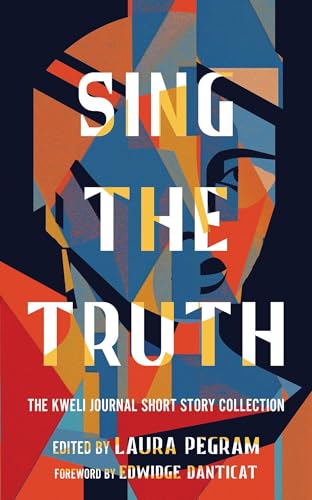
Book Review: Sing the Truth (The Kweli Journal Short Story Collection)

Rating: 3.5 stars

Celebrating 15 Years of Kweli: A must-read collection of bold BIPOC voices.

Hailed as “The Paris Review of BIPOC literature,” Kweli Journal has been a launching pad for many of today’s most celebrated writers. This powerful anthology marks the journal’s 15th anniversary, showcasing 15 unforgettable stories curated by founder Laura Pegram.

With a foreword from award-winning author Edwidge Danticat, the narratives included in this vivid anthology explore the devastation of leaving home and the struggle to adapt to reimagined lives, lost loves, distant families, and buried pasts.

Featuring works from authors including Naima Coster, DéLana R.A. Dameron, Nicole Dennis-Benn, Daphne Palasi Andreades, Susan Muaddi Darraj, and Princess Joy L. Perry, this collection is a testament to the richness and diversity of voices often marginalized in mainstream literature. These stories delve into themes of displacement, loss, and resilience, challenging readers to broaden their perspectives and deepen their understanding of the human experience.

All proceeds from this collection go directly to Kweli Journal, ensuring the continued support of emerging BIPOC writers and the creation of a vibrant literary community.

I received a digital copy of this book on NetGalley for an honest review.

The collection of short stories in the Kweli Journal’s Sing the Truth was an enjoyable read for me. What I liked about these stories is how I felt like I was the person narrating their stories, like I was living their everyday experience. Even though I know I can’t relate to these characters and all their struggles, I didn’t feel that way when reading their stories. I believe a lot of that is due to how real these characters’ struggles felt to me, which is what I was hoping for when I read this collection.

What I also enjoyed reading Sing the Truth was getting to read stories from BIPOC writers. I’m going to be honest, I’m not always the best at reading a diverse set of books. I have a particular set of genres that I really enjoy reading, and I typically stick to reading books within those genres. However, from time to time, I find myself wanting to give other genres in literature a try.  That is when I find myself reading stories I typically wouldn’t, and end up discovering books I enjoy more than I was expecting to.

For me, whenever I read, I usually read books that allow me to escape reality. But I have come to realize, too, that I need to branch out when I read. And for me, that involves reading books outside of the genres I typically enjoy and reading stories that take me out of my comfort zone. As a white woman, I feel like it’s really important that I read stories from BIPOC authors and that I read stories about characters whose voices need to be heard. Stories that are not geared towards someone like me as their intended audience, but that someone like me needs to read all the same, because of the importance of reading about others’ struggles, even if you can’t necessarily relate to them. I also feel like it’s important to read works written by BIPOC authors because I see it as a learning opportunity about other cultures and to acknowledge the struggles people go through just because of the color of their skin. So, for me, I also enjoyed reading this book because of the stories being written by BIPOC writers and having the chance to read about struggles from a perspective I know I’ll never have to face.

What I also found enjoyable about the stories in Sing the Truth was the different themes. A lot of the characters in this collection struggled with loss, feeling out of place, and finances. I enjoyed these stories because they talk about these struggles and how the characters here get through the challenges they are dealing with. I especially enjoyed reading the stories in the collection that focused on loss because of my own experiences with loss that I’ve dealt with. I felt like I could relate to those characters and the choices they made to deal with the loss they were experiencing, even though their loss is different from mine.

There are only two things with this collection of short stories that I didn’t particularly enjoy: the characters and endings. Some of the characters in the short stories I didn’t particularly like. I don’t know for sure if the authors who wrote them made that intentional, but I found some of the characters unlikable. I felt sympathetic for them because of what they were going through, but didn’t like them because of some of the choices they made or how they treated members of their family in the story. The characters, in particular, that come to mind for me are the mothers in most of these stories because of how they used their daughters to get the money they needed. While I understood that they were going through a tough time and needed the money, I wasn’t okay with this aspect in those stories because I felt like the daughters weren’t given a choice in the matter, and the mothers didn’t act like they cared. I also didn’t like the endings for a majority of the stories in this collection. Mostly because I felt like some of the stories ended with no real resolution, or in the middle of the story I was reading, being told. They didn’t make sense to me because they left me feeling like there was more of the characters’ story the author had to tell.

But overall, I enjoyed reading this collection of short stories from the Kweli Journal’s Sing the Truth (link here for anyone interested in checking out their website to learn more about them: https://www.kwelijournal.org/ ). While there aren’t certain stories within the collection that stand out to me to name as my favorite, I enjoyed reading a variety of stories and reading about struggles told by BIPOC authors. Sing the Truth was published on May 13, 2025, for those interested in reading this collection from the Kweli Journal.            

Book Review: Tangleroot

Rating: 3.5 stars

Noni Reid has grown up in the shadow of her mother, Dr. Radiance Castine, renowned scholar of Black literature, who is alarmingly perfect at just about everything.

When Dr. Castine takes a job as the president of the prestigious Stonepost College in rural Virginia, Noni is forced to leave her New England home and, most importantly, a prime internship and her friends. She and her mother move into the “big house” on Tangleroot Plantation.

Tangleroot was built by one of Noni’s ancestors, an enslaved man named Cuffee Fortune―who Dr. Castine believes was also the original founder of Stonepost College, and that the school was originally formed for Black students. Dr. Castine spends much of her time trying to piece together enough undeniable truth in order to change the name of the school in Cuffee’s honor―and to force the university to reckon with its own racist past.

Meanwhile, Noni hates everything about her new home, but finds herself morbidly fascinated by the white, slaveholding family who once lived in it. Slowly, she begins to unpeel the layers of sinister history that envelop her Virginia town, her mother’s workplace, her ancestry―and her life story as she knew it. Through it all, she must navigate the ancient prejudices of the citizens in her small town, and ultimately, she finds herself both affirming her mother’s position and her own―but also discovering a secret that changes everything.

I received a digital copy of this book through the publisher on NetGalley for an honest review.

Tangleroot is a coming-of-age young adult literature story centered around a young black woman who is trying to do things on her own while feeling pressure from her mother to follow in her footsteps. When Noni first moves into this town in Virginia to live on the Tangleroot plantation with her mother, she’s not at all happy to be there and it’s very plain to see. As the story goes on and she begins uncovering more information about her family’s history, Noni realizes she’s exactly where she needs to be and uncovers the truth regarding her family’s relatives that will change everything she and her mother believed they knew.

What Tangleroot does well is provide you with an intriguing story that takes place in a town that you want to learn more about. While this book initially started slow for me, as the story went on, I found myself becoming more interested in hearing Noni’s story. I especially enjoyed Noni learning more about her family history and being able to uncover facets of her family’s ancestry that not even her mother was able to uncover. This aspect of the book was interesting to read about because I felt that while her character is fictional, I felt like the process she undergoes to find out more about her relatives is realistic.

I also found the setting of this small town to be very interesting and wanted to learn more about the town and the people in it. And I feel like this book delivers by providing the reader with a wide cast of characters each with their own stories. With how descriptive this book was, I felt like I was with Noni as she navigates this new unfamiliar place being surrounded by people who don’t know her but have opinions of her because of her mother.

What I also enjoyed about reading this book is how well Tangleroot does in discussing important subject matters such as racism and the role it plays both in the past and in the present day. You see this through Dr. Castine’s experiences with dealing with the school board at Stonepost College, through Noni’s interactions with some of her coworkers at Charm, and even when Noni finds out more about her relative Lacey Castine. As someone aware of her privilege, whenever I read stories like Tangleroot, I’m reminded how fortunate I am to be white. Books like this one also help me gain more knowledge and understanding regarding the struggles minorities go through regularly just because of the color of their skin. And help me sympathize with what’s going on since I know I’ll never be able to understand since it’ll never be my experience.

If there’s anything about Tangleroot I didn’t particularly enjoy it would have to be Noni’s relationship with her mother. It felt like no matter what Noni does here, it’s never enough for her mother. It feels like she’s never happy with any of the decisions Noni makes when they move into the Tangleroot plantation. And I feel like the tough relationship they have with each other is never really discussed either because Noni just ends up doing whatever her mother wants her to do even if it ends up not being what she actually wants. I understand she’s trying to live up to her mother’s expectations, but she never stands up to her mother in this book whenever they are in conflict with each other. I struggled with reading about their relationship because I felt like it shouldn’t have been this way, especially since Noni is old enough in this book to make decisions for herself. And Noni just deals with it, never says to her mother how she feels about things, which wasn’t okay for me.

Overall though, Tangleroot was a wonderful read that I highly recommend. I recommend it to anyone who enjoys reading coming-of-age stories, young adult literature, and historical fiction. Tangleroot was published on October 15, 2024, for anyone interested in reading this book. 

Blog at WordPress.com.

Up ↑