Search

Rainy Day's Books, Video Games and Other Writings

Category

Books

Book Review: This Here is Love

Rating: 4 stars

Three people—two enslaved, one indentured—live beside each other, fighting, and sometimes failing, to be more than their pasts say they should be.

1690s, Tidewater, Virginia. Bless, born into slavery and taken by her masters to toil in the house, faces her mother’s fury, learning that cruelty can come from any side. David, an enslaved child of a freed father, dreams of the promise of liberty made to him. Jack, an impoverished Scots-Irish boy, sails to America to be indentured but, in the hellish crossing, finds his hopes fracturing. Yet, somehow, they all will stake a claim to love.

Hurston-Wright Award winner Princess Joy L. Perry tells us a previously unheard story—one in which characters must carve out choices from the narrowest of circumstances and confront heartrending How far would you go to protect your children from enslavement? How to create a lasting family after being torn from your own? What to value a hard-won opportunity or your humanity? This Here Is Love is an unforgettable story from an astonishing new voice.

I received a digital copy of this book through the publisher on NetGalley for an honest review.

This Here is Love was a challenging book to read, as it dealt with the difficult topic of slavery during the 1690s. The premise of the book centered on three different perspectives and their struggles with slavery: one struggling with slavery, one a free man looking to buy his family into freedom, and the last a man born into servitude, only for unexpected circumstances to occur that changed his lot in life. All three perspectives are unique in how they discuss what’s going on in their lives and deal with their lot in slavery, making this book an interesting read to me, despite how difficult it is to read about people not having a say in how they live their lives.

What I also enjoyed about reading this book was seeing the relationships between the different characters in the story, mostly about seeing Andrew’s relationship with his family and Bless’s relationship with her mother, Cassie. I was also happy to see Bless and David end up finding love in their lives with others than again with each other. I wish the circumstances of Bless and David being together were different, but I am glad they had each other for a little bit, as I felt like they truly needed each other.

As hard as this book is to read, I enjoyed how real the story is. It might not be pleasant to read about slavery in This Here is Love, but I felt like I learned a lot about that time. It makes me realize that no matter how difficult things are in my life, I’ll never have to deal with being seen as less than because of the color of my skin.

If there’s anything about this book, I didn’t enjoy, it would have to be the chapters from Jack’s perspective and the ending of this book for all of the characters. When Jack’s character was first introduced, I didn’t mind his character all too much. But as This Here is Love continues, I found myself disliking his character more and more. It’s not like I don’t understand why he makes the choices he makes, doesn’t mean I have to like them though either. I just got to a point where I didn’t have any sympathy for his character, even when he realizes in the end that his flesh and blood aren’t immune to being sold as a commodity. Yes, he makes the right choice in the end, but it’s not enough to redeem him for me. I also didn’t like the ending of this book with these characters because I felt like it left too much to interpret. I’d love to think that Andrew was not only reunited with his wife and son but also the rest of his family, too. But considering this time, it’s hard to imagine him getting his whole family back. I also want to believe that Bless gets reunited with her love, but I have a hard time imagining it.

As a whole, though while This Here is Love is a challenging read because of how it tackles slavery, I enjoyed reading it. I enjoyed reading the different perspectives, how real the story truly feels, and the relationships between the characters. Just didn’t enjoy reading Jack’s perspective, and wish the ending didn’t leave too much open-ended. I highly recommend though to anyone interested in reading historical fiction that talks about slavery. This Here is Love is set to be released on August 5, 2025, for those interested in giving this book a read.          

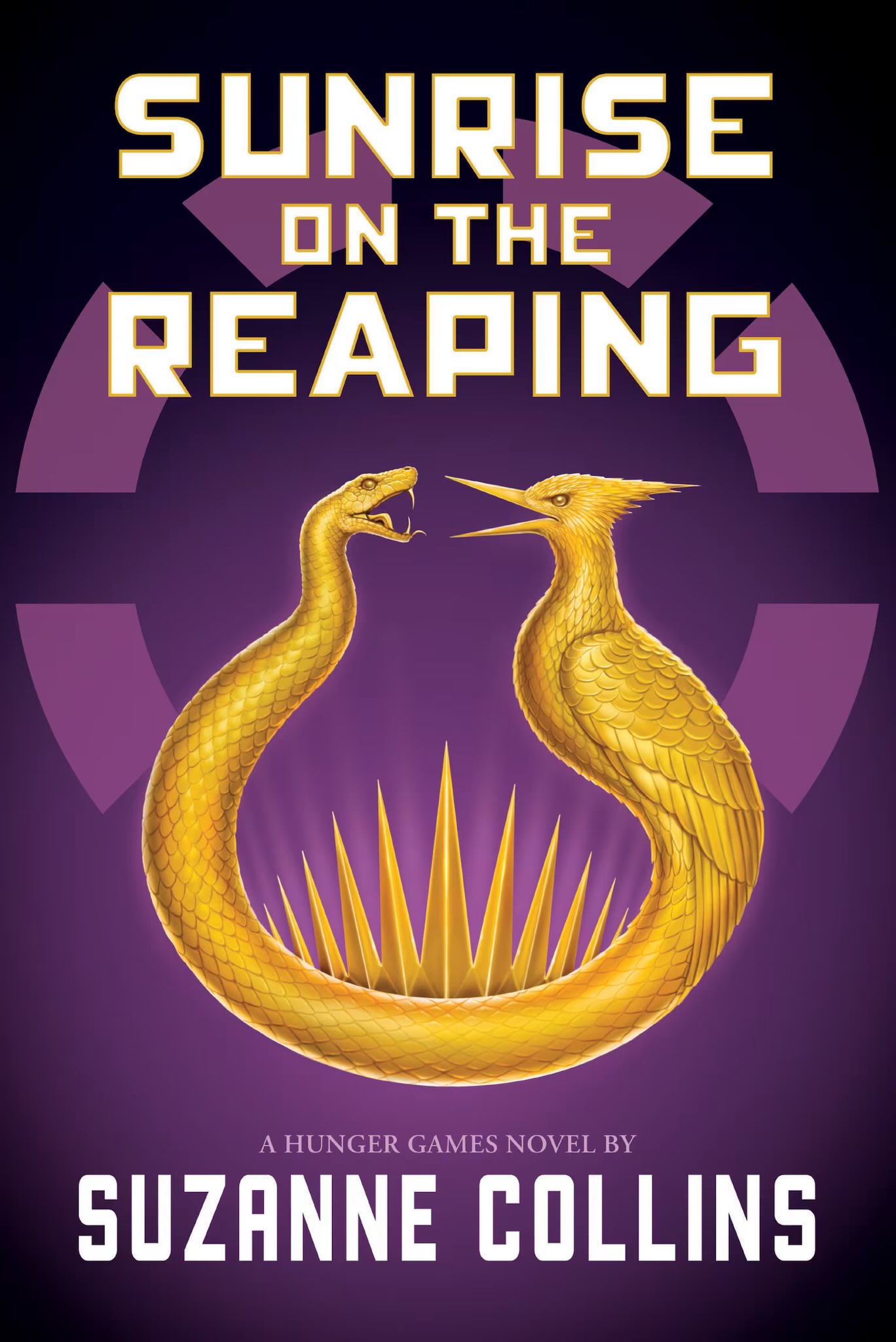
Book Review: Sunrise on the Reaping (The Hunger Games #0.5)

Rating: 4.5 stars

When you’ve been set up to lose everything you love, what is there left to fight for?

As the day dawns on the fiftieth annual Hunger Games, fear grips the districts of Panem. This year, in honor of the Quarter Quell, twice as many tributes will be taken from their homes.

Back in District 12, Haymitch Abernathy is trying not to think too hard about his chances. All he cares about is making it through the day and being with the girl he loves.

When Haymitch’s name is called, he can feel all his dreams break. He’s torn from his family and his love, shuttled to the Capitol with the three other District 12 tributes: a young friend who’s nearly a sister to him, a compulsive oddsmaker, and the most stuck-up girl in town. As the Games begin, Haymitch understands he’s been set up to fail. But there’s something in him that wants to fight… and have that fight reverberate far beyond the deadly arena.

In comparison to when I read The Ballad of Songbirds and Snakes, I enjoyed reading Sunrise on the Reaping significantly more. I feel like I enjoyed this book more for many reasons, one of which is that I enjoyed reading about these Games from Haymitch’s perspective. As Katniss Everdeen’s mentor, I always wondered how he came to be the man introduced in the trilogy, and this book didn’t disappoint in sharing his story.

Even though I knew the fate of the others who participated in the Games he was in, I still found myself rooting for those he worked closely with while in the Arena. And even though I find these Games barbaric and wish they didn’t exist in this world, I continue to find how their setup by the Gamekeepers fascinating to learn more about. I especially found the Arena Haymitch found himself in to be an extremely interesting one, with how things you would normally rely on for food and drink being the things not safe to consume. The mutts that the Gamekeepers created were also interesting because some of them were animals that wouldn’t normally be threatening to people, and how they were used to target certain Tributes in the Games.

I also enjoyed the connection this book makes to The Ballad of Songbirds and Snakes regarding the girl Haymitch falls in love with. She’s very similar to the girl that Snow falls in love with, so seeing that connection here, even though that book isn’t my favorite book in this series, was interesting.     

If there’s anything with Sunrise on the Reaping I didn’t particularly enjoy, it would be the appearances of characters from The Hunger Games trilogy and Haymitch’s actions during the Games. I felt that there were too many characters from the original trilogy in this book, and it didn’t make sense to me for them all to be present. A couple of them I understood making an appearance here, such as the characters that are from the Capitol, but finding a way to tie everyone else into Haymitch’s story didn’t make sense to me. I also wasn’t a fan of a majority of Haymitch’s choices during his Games because I feel like they didn’t make sense for his character. Yes, he does have moments of rebellion before the Games happen. However, a lot of them are due to the situation he finds himself in and due to his dislike of the Capitol. So, Haymitch doing what he does in the Games didn’t make sense to me regarding his character, as it felt more like something the girl he loves would do than him.

As a whole, though, I enjoyed reading Sunrise on the Reaping. I enjoyed getting to read Haymitch’s story and being able to see how he became the man you come to know in The Hunger Games trilogy. Recommend reading this one if you enjoyed Haymitch’s character in the trilogy and want to learn how he won the Games the year he was in them.               

Book Review: The Entirely True Story of the Fantastical Mesmerist Nora Grey

Rating: 4 stars

As spiritualism reaches its fevered pitch at the dawn of the 20th century, a Scottish girl crosses the veil to unlock a powerful connection within an infamous asylum in this thrillingly atmospheric, exquisitely evocative exploration of feminine rage and agency for readers of Sarah Penner, Alice Hoffman, and Hester Fox.

Leaving behind a quiet life of simple comforts, Nairna Liath traverses the Scottish countryside with her charlatan father, Tavish. From remote cottages to rural fairs, the duo scrapes by on paltry coins as Tavish orchestrates “encounters” with the departed, while Nairna interprets tarot cards for those willing to pay for what they wish to hear.

But beyond her father’s trickery, Nairna possesses a genuine gift for communicating with the spirit world, one that could get an impoverished country girl branded a witch. A talent inherited from her grandmother, Lottie Liath, widow of a Welsh coalminer, whose story of imprisonment and exploitation in a notorious asylum is calling out to Nairna from four decades past—a warning to break free from the manipulations, greed, and betrayals of others.

What do the cards hold for Nairna’s future?

Rescued from homelessness by a well-connected stranger, Nairna is whisked into a new life among Edinburgh’s elite Spiritualist circle, including visiting American star Dorothy Kellings. Researchers, doctors, psychics, and thrill-seekers clamor for the rising young medium. But after a séance with blood-chilling results, a shocking scandal ensues, and Nairna flees to a secluded community near Boston, where she assumes a new Nora Grey.

But Nora can’t stay hidden when Dorothy Kellings offers her the chance to face all comers and silence skeptics at a spectacular séance at Boston’s Old South Meeting Hall, where Nora will come face to face at last with her spiritual the courageous Lottie Liath, whose heart-wrenching story and profound messages are indelibly tied to Nora’s destiny.

I received a digital copy of this book through the publisher on NetGalley for an honest review.

The Entirely True Story of the Fantastical Mesmerist Nora Grey is a fantastical historical fiction novel that focuses on the history of spiritualism. This is explored through the perspectives of Nairna (also known as Nora Grey) and her grandmother, Lottie, who both unexpectedly discover their spiritual abilities. I enjoyed reading the perspectives of both women on what was happening in their lives and how they each confronted their newly discovered abilities, as I found learning about these spiritual experiences to be very interesting.   

While both these women lived in different times, what connected them (besides the obvious) was their disdain for the circumstances they found themselves in when it came to utilizing their talents. How others manipulated both of them for personal gain, one manipulated in the name of science and research, and the other manipulated so that others could gain notoriety and be set up for life. It’s no wonder this book is full of feminine rage because both women had several people trying to use them for their gain without caring how Nairna and Lottie felt about it. And I found myself feeling empathetic towards both women as a result as I read their stories, hoping for the best for them.

What I also enjoyed about The Entirely True Story of the Fantastical Mesmerist Nora Grey was in the beginning of each chapter, the articles pertaining to the events that take place in the story. They felt like a good sneak peek into what I could expect to happen in their following chapters and helped me to piece everything that was to happen together.

I also enjoyed the different relationships that occurred throughout the story, mostly with regard to Lottie’s relationships to the women in charge of the asylum she was sentenced to stay in, and Nairna’s complicated relationship with her father, Tavish. I felt like the women in the asylum, Lottie finds herself forced to stay in, genuinely cared about her well-being, and wanted to do right by her, but unfortunately, didn’t have too much power when it came to stopping the doctors’ “experiments.” As for Nairna and her father Tavish, while I didn’t like Tavish in the beginning of The Entirely True Story of the Fantastical Mesmerist Nora Grey because of what he had Nairna help him do to survive in their world, once Nairna makes a name for herself as Nora and Lottie begins to make her appearances, I found myself feeling for him in this book. This is mostly due to him not getting the chance to know his mother all his life, and him having to find out the truth behind why that was the case through Nairna’s abilities. I felt like it was a good way for this book to show generational trauma, which made him a more sympathetic character in the story.

One of the issues I have with The Entirely True Story of the Fantastical Mesmerist Nora Grey, though, is that while I enjoyed the story, it also felt too predictable. I feel this way because it was pretty obvious once you know who Lottie is in relation to Nairna that things don’t work out for her. Especially knowing already that Tavish didn’t know either of his parents, it became clear that things weren’t going to change just because Nairna and Lottie were able to see each other, even though they lived in different times. Nairna’s story is also predictable to me because I knew already she was continuing to do these seances because of wanting to uncover the full story of what happened to her grandmother once she realized that’s who she was seeing. She also makes it clear how she feels about participating in these seances early on, so it was no surprise to me that once she finds out what she does that she decides to no longer participate in them.

I was also disappointed with the magical aspects in this book. I feel like this aspect of the story disappointed me because, as the reader, I was given insight into how these seances were made possible, and I feel like that ruined a little of the magic for me. It also felt more like science than magic to me, especially because of the way it’s explained and the way the doctors use Lottie for their experiments.

As a whole, The Entirely True Story of the Fantastical Mesmerist NoraGrey was an enjoyable read for me. I enjoyed learning more about spiritualism through Nairna and Lottie’s perspectives, seeing the theme of feminine rage throughout, and enjoying the articles at the beginning of each chapter as they gave me a sneak peek of what was to come. And I recommend this book to others reading this post who enjoy reading historical fiction that focuses on spiritualism, and those who enjoy reading books that discuss feminine rage. The Entirely True Story of the Fantastical Mesmerist Nora Grey is set to release on July 29, 2025 for those interested in giving this fantastic book a read.  

Book Review: Midnight at the Cinema Palace

Rating: 3 stars

Walter Simmering is searching for love and purpose in a city he doesn’t realize is fading away—San Francisco in 1993, at the height of the AIDS epidemic and the dawn of the tech revolution. Out of college, out of the closet, and transplanted from the Midwest, Walter is irresistibly drawn from his shell when he meets Cary Menuhin and Sasha Stravinsky, a dynamic couple who live blithely beyond the boundaries of gender and sexuality. Witty and ultra-stylish, Cary and Sasha seem to have stepped straight out of a sultry film noir, captivating Walter through a shared obsession with cinema and Hollywood’s golden age.

As the three embark on adventures across the city, filled with joie de vivre, their lively friendship evolves in unexpected ways. When Walter befriends Lawrence, a filmmaker and former child actor living with HIV, they pursue a film project of their own, with hilarious and tragic results.

Midnight at the Cinema Palace is a vibrant and nostalgic exploration of young souls discovering themselves amidst the backdrop of a disappearing city. Christopher Tradowsky’s astonishing debut captures the essence of ’90s queer culture and the complex lives of friends seeking an aesthetically beautiful and fulfilling way of life.

I received a digital copy of this book through the publisher on NetGalley for an honest review.

Midnight at the Cinema Palace was an interesting read, particularly in its exploration of the characters’ relationships and the discussions that involved sexuality. I particularly enjoyed seeing Walter’s relationships with Cary and Sasha, as well as his friendships with Jeff, Fiona, Kelly, and Lawrence. I feel that all these characters made this book interesting for me to read, as they each brought Walter out of his introverted shell and made him see the world he lived in from a different perspective. As I had never read a story that deeply explored the relationship between a throuple, I was fascinated to see how Walter, Cary, and Sasha interacted with each other and how their sexuality influenced their interactions. With regards to Walter’s friendships, it was interesting to see how he interacted with all of his friends in comparison to how he acted when he was with Cary and Sasha. 

What I also enjoyed about this book is how descriptive Christopher Tradowsky’s writing is when it comes to describing San Francisco and the life Walter lives. While at times the story felt too descriptive, so that I felt overwhelmed in trying to imagine this city, I also felt like this book was a love letter to San Francisco and to those who live there. It was also interesting to read about this time to me, as 1993 is the year I was born. So it was interesting to read about this time from the perspective of an adult living through this time since I didn’t personally get to experience what Walter and this cast of characters were going through.

I also enjoyed Midnight at the Cinema Palace as there were segments of the screenplay Walter and Cary were working on together included in some of the chapters. I found it interesting to be given the screenplay they were working on together, as I was reading about their relationship, as I was able to see how they worked together creatively.

If there’s anything with this book, I didn’t particularly enjoy it was the plot. Or lack thereof, because I was expecting it to be a little different from what it was. In the synopsis of the book, the AIDS epidemic was mentioned, but as a reader, the AIDS epidemic isn’t a huge part of the plot in the story. The main story here is with regard to Walter’s relationship with Cary and Sasha. Which I didn’t necessarily mind as I like them as characters and was interested to see how things would transpire with them. My problem with this being the plot is that I didn’t truly feel like the story went anywhere here until Walter met them. So the beginning of the book was very slow-moving to me until they came into the picture.

But even once they all meet, I still feel like the plot wasn’t all that much either. Mostly because a majority of their interactions with each other involved going out partying together, and Walter getting drunk. Which, to me, felt like a filler in the story, as I feel like most of those times out together didn’t need to be written about. I feel like the book didn’t pick up plot-wise until halfway through, which isn’t good because people are more likely to have already decided if they’ll continue reading the book by that point.

As a whole, though, what made Midnight at the Cinema Palace a good read for me was the characters and seeing the world of San Francisco they live in. Just be prepared to be disappointed if you’re looking to read a book with a fast-moving plot, as this book doesn’t have one, even though it was still enjoyable to read. For those interested in reading Midnight at the Cinema Palace, it was published on June 10, 2025, so it is now available for you to read.  


Book Review: Don’t Let the Forest In

Rating: 3.5 stars

Once upon a time, Andrew had cut out his heart and given it to this boy, and he was very sure Thomas had no idea that Andrew would do anything for him. Protect him. Lie for him. Kill for him.

High school senior Andrew Perrault finds refuge in the twisted fairytales that he writes for the only person who can ground him to reality―Thomas Rye, the boy with perpetually ink-stained hands and hair like autumn leaves. And with his twin sister, Dove, inexplicably keeping him at a cold distance upon their return to Wickwood Academy, Andrew finds himself leaning on his friend even more.

But something strange is going on with Thomas. His abusive parents have mysteriously vanished, and he arrives at school with blood on his sleeve. Thomas won’t say a word about it, and shuts down whenever Andrew tries to ask him questions. Stranger still, Thomas is haunted by something, and he seems to have lost interest in his artwork―whimsically macabre sketches of the monsters from Andrew’s wicked stories.

Desperate to figure out what’s wrong with his friend, Andrew follows Thomas into the off-limits forest one night and catches him fighting a nightmarish monster―Thomas’s drawings have come to life and are killing anyone close to him. To make sure no one else dies, the boys battle the monsters every night. But as their obsession with each other grows stronger, so do the monsters, and Andrew begins to fear that the only way to stop the creatures might be to destroy their creator…

From beginning to end, Don’t Let the Forest In is a book that had me hooked, eager to know what would happen next. In particular, what drew me to reading this book was the horror that was unfolding, combined with its setting at an academy for wealthy students. I also enjoyed it due to the monsters coming to life were from fairytales that Andrew came up with that Thomas drew. While I feel like there’s never any real explanation given as to why these events unfold, I enjoyed reading about it all to find out what would happen next. There’s just something about monsters coming to life from stories people have written that always draws me in. And this book was no different.

What Don’t Let the Forest In also did well was incorporate themes into the book that connected to what was going on in the story. These themes can be seen throughout the story through Andrew’s character as he struggles to fit in at school and deal with his mental and physical health issues, along with everything that has changed upon his return to school. Even though Andrew wasn’t my favorite character in this book (I’ll discuss that later), I found myself still hoping for the best for him, as he went through a lot in this book.

I also enjoyed the little snippets of the fairy tales Andrew had written that were incorporated at the beginning of chapters, and the pictures of the monsters Thomas and Andrew encountered. I felt like seeing these in this book allowed me to imagine what Andrew and Thomas were dealing with at Wickwood Academy. But it also helped me relate to these characters, as I found I was able to relate to Andrew through his telling of dark fairytales. If anything from reading those little blurbs, I found myself wanting to read the stories Andrew writes to find out what happened in them.

With Don’t Let the Forest In, what I didn’t particularly like was the lack of character development and details in the story. When reading this book, I felt like there was no character development for Andrew at all. Yes, he eventually gets to a point where he’s able to deal with the monsters on his own. But when it comes to everything else that happens in this book, he acts like he can’t deal with anything. And there’s never any discussion around why his character acts this way or anything in the story that explains it. It makes it hard for me to like his character because there’s no growth for him in this book. What also bothered me was the lack of details regarding why these monsters existed to begin with. I figured that as the story went on, there would be an explanation here for why these monsters exist. But if there is one, I didn’t see it because it felt like they just suddenly were at their school. Both these things bothered me as I felt like I was reading a story with missing information that I would’ve liked to have to get more insight into the story.

What I also didn’t like with this story was the sudden twist added to the story and the ending. I felt like the sudden twist that was added to the story didn’t do much other than add shock for the reader and cause Andrew pain. It was also something I felt like was easy to tell had happened, considering how little the character involved was actually in the story. While it did make me feel sorry for Andrew, I felt like it didn’t add anything to the story here for me, other than explain why this character wasn’t as heavily involved in this book as I was expecting her to be. As for the ending, like several of the books I’ve read this year, it was an open ending. And like I said before with previous reads, I don’t mind open endings, but with the way this story was written, I felt like the way it was left made me feel like this story didn’t have a happy ending for these characters. With this book, all I can truly imagine is a grim ending for these characters, which wasn’t at all what I was hoping for.   

Overall, though, I enjoyed reading Don’t Let the Forest In because of the horror in the story and getting to see these monsters brought to life. Also, incorporating a little of the fairy tales Andrew writes and having pictures of the monsters was a nice touch that I enjoyed and wanted to see more of. I just wish there had been more with regard to character development, the twist in the story, and the end of the book, as those were the things in this book that I didn’t particularly care for when  I was reading this. But I still enjoyed it and recommend Don’t Let the Forest In to anyone who enjoys horror stories that take place at an academy.     

Book Review: Bring Me Your Midnight

Rating: 4 stars

From the New York Times bestselling author of The Nature of Witches and Wild is the Witch comes a lush romantic fantasy about forbidden love, the choices we make, and the pull between duty and desire.

Tana Fairchild’s fate has never been in question. Her life has been planned out since the moment she was born: she is to marry the governor’s son, Landon, and secure an unprecedented alliance between the witches of her island home and the mainlanders who see her very existence as a threat.

Tana’s coven has appeased those who fear their power for years by releasing most of their magic into the ocean during the full moon. But when Tana misses the midnight ritual—a fatal mistake—there is no one she can turn to for help…until she meets Wolfe.

Wolfe claims he is from a coven that practices dark magic, making him one of the only people who can help her. But he refuses to let Tana’s power rush into the sea, and instead teaches her his forbidden magic. A magic that makes her feel powerful. Alive.

As the sea grows more violent, her coven loses control of the currents, a danger that could destroy the alliance as well as her island. Tana will have to choose between love and duty, between loyalty to her people and loyalty to her heart. Marrying Landon would secure peace for her coven, but losing Wolfe and his wild magic could cost her everything else.

I enjoyed reading Bring Me Your Midnight, especially because of how magic is portrayed in the story. The coven Tana is a part of incorporates their magic through the perfumes they use, the tea they make, and they release the buildup of their magic during the full moon. I found all these aspects of their magic interesting because I had never read a story before where magic was used in this way. I also enjoyed the magic Tana learns about from Wolfe because it’s different from the type of magic Tana is accustomed to, and I enjoyed getting to read Tana’s reactions to his magic. The way magic was woven into the story felt magical in itself, and I was excited to continue reading this story to learn more about it.  

Another aspect of this book I enjoyed was seeing the relationships between the covens and the mainlanders. It was interesting to learn about the dynamics between the two different groups of people and learning the importance of an alliance between the mainlanders and the new coven. I also enjoyed seeing the relationships between Tana and the people closest to her. In particular, her relationship with her best friend Ivy and the man she was set to marry, Landon. Tana’s friendship with Ivy stood out to me because I could see how much they cared about each other even when they disagreed. I enjoyed seeing her relationship with Landon, too. While he was marrying her more out of duty than love, I felt like I saw potential between them as a couple. A potential that I wish the story had explored further.

I also enjoyed Tana’s character in Bring Me Your Midnight. I felt like she was a wonderful main character for this story, as she was someone you could relate to. A character who pursues what she cares about, stays loyal to those she loves, and remains curious about what she discovers. Even though I couldn’t understand everything she was going through, I felt like I could relate to her when I was reading her story and wanted everything to turn out well for her. Especially her love of swimming, as that’s something I also enjoy.    

What I didn’t particularly like about Bring Me Your Midnight was the relationship between Tana and Wolfe. I didn’t feel a connection between them when I was reading this book at all. I also felt like her attraction to him was due to wanting something different from herself than what was expected of her, and because she enjoyed using the type of magic Wolfe showed her how to use. While I found his magic interesting and wanted to learn more about it, Wolfe’s character didn’t feel all that interesting to me.

What I also didn’t enjoy about this book was the lack of details in the story. I feel like Rachel Griffin does a wonderful job of describing the world Tana lives in. But I feel like there were a lot of details in the story that were never fully explained, which frustrated me. For example, with the decision Tana makes, it’s never explained how her choice will impact her coven’s relationship with the mainlanders. I was also frustrated by the many secrets Tana’s mother kept from the rest of the members of the coven (such as the existence of the old coven and the truth surrounding the moonflowers), and felt like an explanation was needed regarding why their coven didn’t know about these things. However, I wonder if this lack of detail frustrated me simply because I was so invested in the story and wanted more.  

Bring Me Your Midnight is a read I highly recommend. I recommend this book to anyone who enjoys young adult literature and is looking for a different type of magic than they typically see. After reading this book, I feel confident that I’ll check out more books by this author in the future, as I enjoyed reading this book and don’t think I’d be disappointed reading some of her other works.               

Book Review: Sing the Truth (The Kweli Journal Short Story Collection)

Rating: 3.5 stars

Celebrating 15 Years of Kweli: A must-read collection of bold BIPOC voices.

Hailed as “The Paris Review of BIPOC literature,” Kweli Journal has been a launching pad for many of today’s most celebrated writers. This powerful anthology marks the journal’s 15th anniversary, showcasing 15 unforgettable stories curated by founder Laura Pegram.

With a foreword from award-winning author Edwidge Danticat, the narratives included in this vivid anthology explore the devastation of leaving home and the struggle to adapt to reimagined lives, lost loves, distant families, and buried pasts.

Featuring works from authors including Naima Coster, DéLana R.A. Dameron, Nicole Dennis-Benn, Daphne Palasi Andreades, Susan Muaddi Darraj, and Princess Joy L. Perry, this collection is a testament to the richness and diversity of voices often marginalized in mainstream literature. These stories delve into themes of displacement, loss, and resilience, challenging readers to broaden their perspectives and deepen their understanding of the human experience.

All proceeds from this collection go directly to Kweli Journal, ensuring the continued support of emerging BIPOC writers and the creation of a vibrant literary community.

I received a digital copy of this book on NetGalley for an honest review.

The collection of short stories in the Kweli Journal’s Sing the Truth was an enjoyable read for me. What I liked about these stories is how I felt like I was the person narrating their stories, like I was living their everyday experience. Even though I know I can’t relate to these characters and all their struggles, I didn’t feel that way when reading their stories. I believe a lot of that is due to how real these characters’ struggles felt to me, which is what I was hoping for when I read this collection.

What I also enjoyed reading Sing the Truth was getting to read stories from BIPOC writers. I’m going to be honest, I’m not always the best at reading a diverse set of books. I have a particular set of genres that I really enjoy reading, and I typically stick to reading books within those genres. However, from time to time, I find myself wanting to give other genres in literature a try.  That is when I find myself reading stories I typically wouldn’t, and end up discovering books I enjoy more than I was expecting to.

For me, whenever I read, I usually read books that allow me to escape reality. But I have come to realize, too, that I need to branch out when I read. And for me, that involves reading books outside of the genres I typically enjoy and reading stories that take me out of my comfort zone. As a white woman, I feel like it’s really important that I read stories from BIPOC authors and that I read stories about characters whose voices need to be heard. Stories that are not geared towards someone like me as their intended audience, but that someone like me needs to read all the same, because of the importance of reading about others’ struggles, even if you can’t necessarily relate to them. I also feel like it’s important to read works written by BIPOC authors because I see it as a learning opportunity about other cultures and to acknowledge the struggles people go through just because of the color of their skin. So, for me, I also enjoyed reading this book because of the stories being written by BIPOC writers and having the chance to read about struggles from a perspective I know I’ll never have to face.

What I also found enjoyable about the stories in Sing the Truth was the different themes. A lot of the characters in this collection struggled with loss, feeling out of place, and finances. I enjoyed these stories because they talk about these struggles and how the characters here get through the challenges they are dealing with. I especially enjoyed reading the stories in the collection that focused on loss because of my own experiences with loss that I’ve dealt with. I felt like I could relate to those characters and the choices they made to deal with the loss they were experiencing, even though their loss is different from mine.

There are only two things with this collection of short stories that I didn’t particularly enjoy: the characters and endings. Some of the characters in the short stories I didn’t particularly like. I don’t know for sure if the authors who wrote them made that intentional, but I found some of the characters unlikable. I felt sympathetic for them because of what they were going through, but didn’t like them because of some of the choices they made or how they treated members of their family in the story. The characters, in particular, that come to mind for me are the mothers in most of these stories because of how they used their daughters to get the money they needed. While I understood that they were going through a tough time and needed the money, I wasn’t okay with this aspect in those stories because I felt like the daughters weren’t given a choice in the matter, and the mothers didn’t act like they cared. I also didn’t like the endings for a majority of the stories in this collection. Mostly because I felt like some of the stories ended with no real resolution, or in the middle of the story I was reading, being told. They didn’t make sense to me because they left me feeling like there was more of the characters’ story the author had to tell.

But overall, I enjoyed reading this collection of short stories from the Kweli Journal’s Sing the Truth (link here for anyone interested in checking out their website to learn more about them: https://www.kwelijournal.org/ ). While there aren’t certain stories within the collection that stand out to me to name as my favorite, I enjoyed reading a variety of stories and reading about struggles told by BIPOC authors. Sing the Truth was published on May 13, 2025, for those interested in reading this collection from the Kweli Journal.            

Book Review: Out of Air

Rating: 4 stars

The deeper you go, the darker you fall.

Phoebe “Phibs” Ray is never more at home than when she’s underwater. On a dive six months ago, she and her four closest friends discovered a handful of ancient gold coins, rocketing them into social media fame. Now, their final summer together after high school, they’re taking one last trip to a distant Australian island to do what they love most – scuba dive.

While diving a local reef, Phibs discovers a spectacular underwater sea cave, rumored to be a lost cave with a buried treasure. But when Phibs and her best friend Gabe surface from the cave, they notice that they’re undergoing strange changes. Oozing gashes that don’t heal. Haunting whispers in their heads… Something has latched onto them, lurking beneath their skin, transforming them from the inside out.

When treasure hunters arrive, desperate to find the location of the cave and hold Phibs’ group for ransom, she’ll do anything to keep her friends safe. In the process she learns that, of all the dreadful creatures of the sea, she might be the most terrifying of them all.

I received a digital copy of this book through the publisher on NetGalley for an honest review.

Out of Air was an enjoyable read for me. It’s the perfect type of book to read for anyone interested in learning about diving and anyone who enjoys the sea without having to leave the comfort of their home. The imagery the author uses throughout the story to describe where Phibs and her friends were when they went diving made me feel like I was right there with them, waiting to see what they would uncover next. And it made me interested in reading her story to see what would happen with her and her friends.  

What I also enjoyed about this book was the switch between the past and the present. I felt like it was a wonderful way to get to know this group of teens and get an understanding of their dynamics together. I also feel like it gave me a better understanding of what had happened to them six months ago, which had resulted in their little group getting the amount of media attention they received. It also felt like a great way to connect to what was presently going on because you can see how the choices they made then impacted their present.

Out of Air is also a book that has an overall great vibe, as I felt many different emotions while reading it. I feel like this is because, as the plot unfolds, you can feel the tension in the air as you know there’s something bad that’s going to happen, but you don’t necessarily know what. But with each turn of the page, you can feel it, which makes you want to continue reading the story to find out what’s going to happen. The pacing of the story in this book was just perfect for what was going on, so I couldn’t wait to continue reading it.

I even enjoyed the open ending. As a reader, I felt like it allowed me to interpret what I felt would happen with these characters after everything they endured. I do, however, feel like this book ended too suddenly for what was going on. This bothered me because I feel like there was more to their story that could’ve been told. I also feel like a lot of the conflicts in this book were too easily resolved, which could also be a part of why I feel like this story needed more story in it than what I read. The best example that comes to mind for me is when Phibs finds out who in her friend group is the one who kept their coin when she had asked her friends to turn them in. The reason we found out is that this character tells Phibs they kept the coin and tells her why as well. And then it ends up becoming a non-issue once it’s revealed, too, even though she’s been upset about it the whole time.      

If there is anything else with this book I didn’t enjoy it would have to be a lack of character development. Granted, I didn’t mind the story being told from Phibs’ perspective. But what bothered me was that I feel like with this book, what happened to these characters could’ve easily happened to anyone, as I feel like these characters didn’t have much of a personality to me. It bothered me, though, because of how much I enjoyed reading this book, that I wanted these characters to have a little more personality than they do.

But overall, I enjoyed reading Out of Air. It was the perfect read for me as someone who’s always loved the ocean and was curious to learn about diving. It also felt like this book provided the perfect amount of tension in the story, which makes you want to continue to read it to find out what happens next for anyone who likes stories that have tension in them. Out of Air was published on May 13, 2025, for those interested in reading this book.            

Book Review: Hades Saga (Books 1-3)

After I finished reading the Hades X Persephone Series, I knew I was going to read the Hades Saga too. I knew I needed to see how this story, told from Hades’s perspective, differed from Persephone’s and see if there was anything different about these books than the others. And this saga didn’t disappoint. Like with the Hades X Persephone Series, though, I’m going to discuss each of the books here so you can get a clear picture of what I think of these books.  

A Game of Fate (Hades Saga #1)

Rating: 4 stars

Hades, God of the Underworld, is known for his inflexible rule, luxurious night clubs, and impossible bargains. Use to control, he is not prepared to discover the Fates have chosen his future wife and Queen—Persephone, Goddess of Spring.

Despite her attraction to the god, Persephone, an ambitious journalism student, is determined to expose Hades for his cruel and ruthless ways.

Hades finds himself faced with the impossible—proving his future bride wrong. Despite his efforts, there are forces who wish to keep the two apart and Hades comes to realize he will do anything for his forbidden love, even defy Fate.

What I enjoyed reading A Game of Fate was not only getting their love story told from Hades’ perspective but also finding out more about the inner workings of the Underworld. In the books from Persephone’s perspective, you don’t get that because she’s never been there until after she’s met Hades. And I enjoyed it because you, as the reader, get to see what it takes Hades to keep everything going in the Underworld.

What I also enjoyed about the story here is that when Hades meets Persephone, there are other things going on that he’s dealing with. I enjoyed seeing this story from his perspective because I got to learn about what other things he has to deal with while he’s simultaneously falling in love with Persephone. I feel like this gives me, as a reader, a better understanding of why he acts the way he does in these books. I also enjoyed reading his thoughts when it comes to her, too, because the author does a wonderful job of putting us in Hades’s shoes.   

What I also enjoyed in A Game of Fate was seeing his interactions with Hecate and Hermes. I feel like this book does a wonderful job of highlighting the dynamics in his friendships with other immortal beings.

If there was anything with this book I didn’t particularly like, which I know I’ll more than likely say with the rest of the books in this saga too, it’s what information he’s keeping from Persephone. While I understand his need to protect her from things she doesn’t fully understand yet, I feel like he can sometimes be a little overprotective when it comes to her. But it feels like in this book, it’s a little too much since the two of them have just met and are still in the process of getting to know each other. Especially with him already knowing that she’s destined to be his wife.

As a whole, though, A Game of Fate was an enjoyable read for me in this saga, as I enjoyed getting to see their story told from Hades’ perspective and getting to see the inner workings of the Underworld realm that Hades rules. Also, just really enjoyed getting to see his interactions with other immortals and seeing his relationship with Persephone bloom.   

A Game of Retribution (Hades Saga #2)

Rating: 4.5 stars

Hades, God of the Dead, does not take sides or bend the rules. He makes no exceptions to these values—not for god or mortal, even his lover, Persephone, Goddess of Spring.

Usually, fear prevents retaliation. But not this time.When Hera, Goddess of Women, approaches Hades with a plan to overthrow Zeus, he declines to offer help. As punishment, Hera sentences Hades to perform a series of labors. Each feat seems more impossible than the last and draws his attention away from Persephone—whose own tragedy has left her questioning whether she can be Queen of the Underworld.

In comparison to its predecessor, A Game of Retribution was a much more enjoyable read for me. I enjoyed it because, as a reader, I continue to see what’s going on from Hades’ perspective. I also enjoy that I get to see hints regarding what’s to come later in this series through this book. I see this through Hera asking Hades to help her with her plan to overthrow Zeus. But when he refuses to help her, she chooses to put his relationship with Persephone through the wringer. You get hints of what’s to come plot-wise in the story through this because it’s apparent how much Hera can’t stand her husband, and we get to see her surrounding herself with the character who’s going to take advantage of that.     

This book in the series is the one where their relationship struggles the most. When seeing what had happened through Persephone’s perspective, I hadn’t understood as much why Hades hadn’t been around for her as much as he maybe should’ve. But after reading this book, I now understand why. I’m not saying, though, that you have to read A Game of Retribution to necessarily know that Hades has problems of his own he’s dealing with. After all, he is the God of the Dead, so it would make sense to me that things are going on that we wouldn’t be privy to. If anything, this just highlights to me how every relationship has struggles. But what matters when it comes to them is how you handle those struggles. And in this book, it’s very apparent how much Hades cares about Persephone with how he fights for them.

What I also enjoyed about reading this book is that I felt like I had more of an understanding of Hades’ character. I felt like I could see how much he cares about Persephone through the choices he makes to protect their relationship from those who want to destroy it.    

The one issue I had with A Game of Retribution is the same issue I had with A Game of Fate: Hades not sharing everything with Persephone with regards to what he’s dealing with in his life. If anything, it was more of an issue in this book for me because of what Persephone was going through. I felt like Hades acted a lot like he didn’t understand why Persephone was upset about losing her friend. I get that since they live in the Underworld, she would get to see her friend whenever she wanted. But with the way she loses her, I felt like Hades should’ve told her what would happen if she were to interfere with fate. I felt like if he had done so, things could’ve turned out differently here than they did. I’m not saying I blame Hades necessarily for how things turned out, but I do think he should’ve had an honest conversation with her about what happens when you try to interfere with the fate of someone when it’s their time to go.

But as a whole, I immensely enjoyed reading A Game of Retribution as I love reading this story from Hades’ perspective. I also enjoyed it because of getting to see the struggles he’s going through while Persephone is dealing with the loss of her friend, and what he’s doing to overcome his problems.

A Game of Gods (Hades Saga #3)

Rating: 3 stars

Hades, God of the Dead, has finally made Persephone his in every way possible. With their wedding on the horizon, the couple should be ecstatic. But Demeter is wreaking havoc on their bliss by battering the whole of New Greece with erratic and dangerous weather. At the same time, Theseus continues with his agenda against the Gods, allying with the hate-group Triad in an effort to bring down all of Olympus.

Hades refuses to allow anything to stop him from securing Persephone as his bride, but he must play a deep strategic game with the Gods of Olympus to safeguard their future. And it is not entirely clear which Gods are truly on his side.

Out of the books in the Hades Saga, A Game of Gods is my least favorite one. What I enjoyed about it is seeing the story being told from Dionysus’ point of view from when he was first introduced to Ariadne. And seeing how what the two of them are doing together connects with what’s going on in Hades’ life with Persephone. I found those chapters interesting because they brought to light some information I didn’t originally have before.

What I also enjoyed about this book was seeing Hades and Persephone’s relationship continue to develop. Seeing how they have overcome a lot of the issues that they have in this series as a whole. I also enjoyed seeing Hades’ relationships with Hecate and Hermes in this book continue to develop.     

However, there was a lot about A Game of Gods I didn’t like. In particular, it felt like, other than the chapters told from Dionysus’ point of view, there wasn’t a whole lot of new information I gleaned from reading this book. If anything, this book just felt like a complete retelling of the events that take place in A Touch of Malice, minus the chapters that are from Dionysus and Theseus’ point of view. Speaking of Theseus, I felt like his chapters in this book were completely pointless, as they didn’t add anything to the story for me and could’ve been completely taken out.

Don’t get me wrong, I still enjoyed reading this book. But in comparison to the rest of the books in this saga, it felt like there wasn’t really anything new that it brought to the story with these characters.   

As for the Hades Saga as a whole, I enjoyed reading it. I enjoyed getting to see the story told from Hades’ perspective and getting insights into the Underworld directly from the God of the Dead that we never could’ve gotten from Persephone. I also enjoyed it because I learned what was going on in Hades’ life while he was falling in love with Persephone, and seeing their relationship continue to develop. My biggest issue with this saga was how much Hades doesn’t tell Persephone about what’s going on. I get he does it because he wants to protect her, but a lot of what’s happening is things that are eventually going to impact her life, too. So I feel like he just needed to be honest with her and tell her. But overall, as a whole, I enjoyed reading this series too.      

Blog at WordPress.com.

Up ↑